
Start with simple goals that matter for everyday life. Training at home builds a foundation for safer walks, calmer greetings, and easier vet visits. Keep sessions short — about five to ten minutes — and end on a high note so progress feels fun and steady.
Focus on a handful of reliable cues first. Pick core items like sit, down, come, loose-leash walking, and stay with a clear release. That small list keeps rules predictable and makes behavior easier to repeat in new places.
Use positive reinforcement: reward the actions you want so the pet repeats them. You don’t need a pro. With consistency, a simple plan, and rewards your animal cares about, you will see small wins over time.
Key Takeaways
- Keep training short, regular, and positive.
- Start with five core cues that help daily life.
- Reward wanted behavior so it increases naturally.
- Progress comes as steady small wins, not instant results.
- Add safety cues like leave it and drop it as you go.
Set Yourself Up for Success With Positive Reinforcement Training
Begin with rewards that truly motivate your pet and build trust. Pick a small “paycheck” that means something to your dog: high-value treats, a favorite toy, or warm praise paired with a quick snack.
Choose rewards your dog values: treats, toy play, and praise
Match the reward to the moment. Use tiny tasty treats for new or tricky steps, kibble for quick reps, and a tug or toss when play lifts focus. Make praise real by delivering it right when the behavior happens.
Keep training sessions short, upbeat, and consistent
Run brief training sessions of 5–10 minutes at a time. Fit them into routines—before meals or after potty breaks—so practice is easy and steady.
“Stop while your dog still wants more.”
Pick a quiet “home base” to reduce distractions and build focus
Choose a low-distraction spot like a hallway or corner of the living room. This helps dogs succeed before adding kids, visitors, or outside noises.
- Consistency: same cue, same motion, same timing.
- Spot signs: sniffing or wandering means simplify the step or up the reward.
- Avoid punishment: yelling and leash jerks can make cues feel scary and slow progress.
How to Teach Your Dog Basic Commands With Simple, Repeatable Steps
Begin every drill with a simple training loop: set the room, give a single cue, help the dog succeed (capture or lure), reward immediately, then reset for the next rep.
Teach the sit command using capturing or a food lure
Capture a natural sit by marking and rewarding the sitting position as it happens. Or lure: lift a treat toward the nose and back over the head so the rear lowers into the sitting position. Fade the food lure slowly until the sit command stands on its own.
Teach down from a sit or stand without forcing
From a sit or a stand, guide a treat down along the ground so the dog follows and lowers its elbows to the ground. Reward the chest or elbows touching the ground, never push the pet into place.
Teach recall as an indoor game
Call the dog’s name plus a recall word, step away to invite chase, and reward heavily when the dog comes. Avoid grabbing or scolding at the end—reward and praise so returning is always fun.
Loose-leash walking: small steps
Reward the dog for walking by your knee. Take one step, reward, and change direction if the leash tightens. Use “let’s go” for casual walking and “heel” for a focused front position—pick one cue and practice it.
Teach stay with a release word
Give the stay cue, pause for seconds, then say OK as the release and reward. Build duration first, then add distance in small steps.
- Mini-week plan: two 5-minute sessions per day: Day 1 sit, Day 2 down, Day 3 recall, Day 4 leash, Day 5 stay, Day 6 review, Day 7 rest.
| Command | Method | Quick Goal | Next Step |
|---|---|---|---|
| sit | capture or food lure | reliable on cue | fade lure, add distance |
| down | lure to ground | elbows on ground | short duration then duration+distance |
| recall | name + fun recall | comes indoors happily | add distractions, avoid grabbing |
| leash/stay | reward near knee / release word | loose leash / brief stay | increase steps and seconds |
Use Fewer Words: Build Clear Cues, Positions, and Hand Signals
A compact set of words helps dogs link signals to behavior fast. Fewer cues reduce confusion and let the animal focus on the action, not on decoding similar-sounding words.
One cue, one action across places works best. Pick a single word for an action and use it in the crate, kitchen, or car so the concept generalizes. For example, a single kennel-style word can mean “go into the space I point at,” regardless of the container or room.
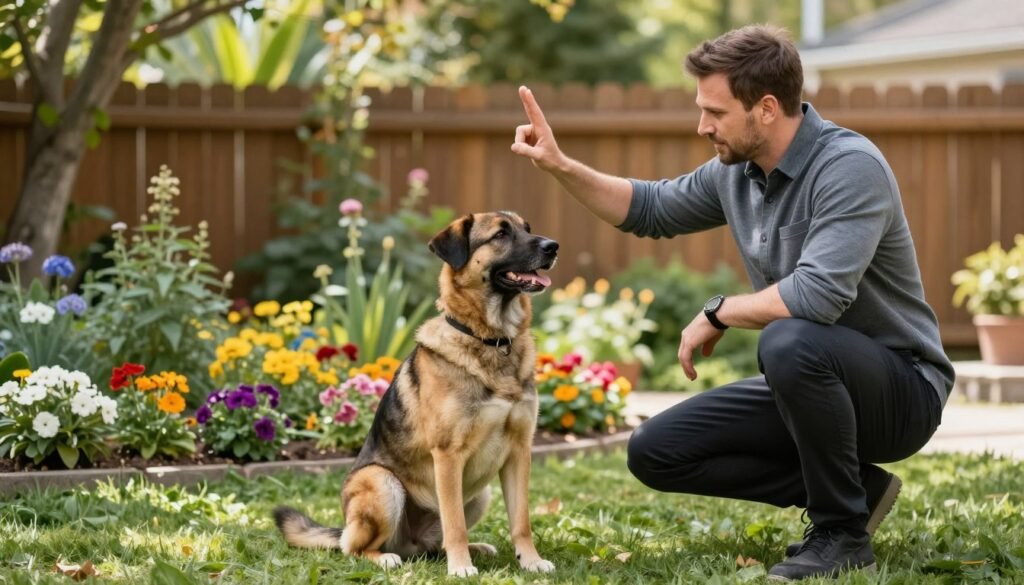
Pair speech with a hand signal
After your pet already knows a verbal cue, add a clear hand signal. Show the hand, give the word, and reward the response. Repeat until the hand signal alone prompts the position.
- Keep cues distinct: use one short command per action so the dog learns the behavior, not a new word each place.
- Avoid repeating names or commands when there is no response—move closer, lower distraction, or raise the reward instead.
- Consistent positions: set clear standards for front and heel so you don’t add extra words like “get in” or “back.”
Using fewer words speeds learning, pairs neatly with hand signals, and makes obedience more reliable in real-life exercise and routines.
Add Safety Commands That Protect Your Dog (and Your Stuff)
A few reliable safety commands can prevent small mistakes from becoming emergencies. Safety matters even if your pet already knows sit and come. A quick cue can stop a grab for chicken bones, socks, or anything found on the ground.
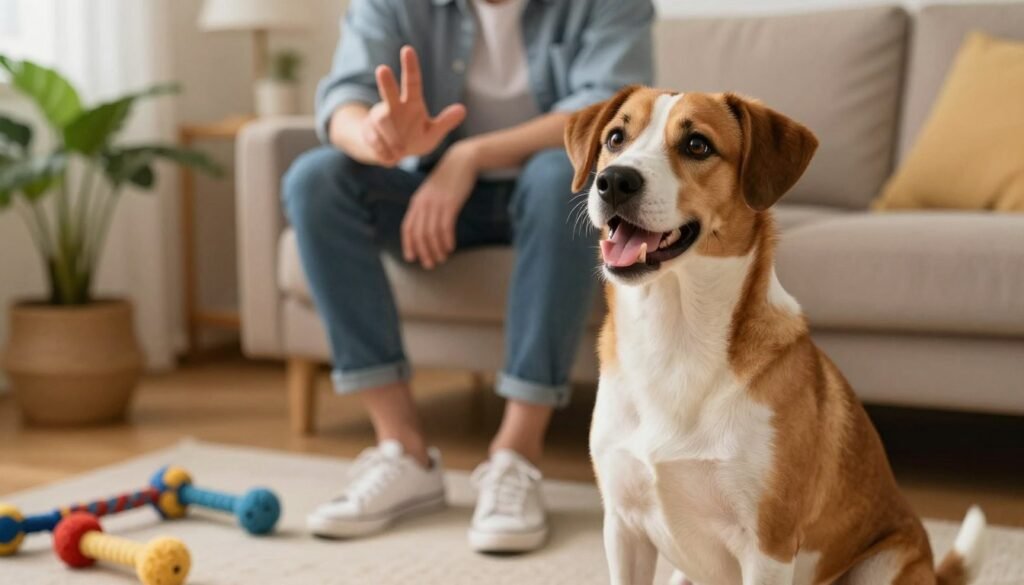
Teach “leave it” as impulse control
Start with a low-value item in a closed hand. Reward when the dog looks away or backs off. Open the hand only after the dog disengages.
Step up slowly: move from closed hand, to open hand, then to food or toys on the floor.
Teach “drop it” with a calm trade
Offer a high-value treat while the dog holds a toy. When the mouth opens, give the treat and praise. This turns release into a positive exchange, not a tug-of-war.
Practice with different toys and household items so the command generalizes.
Teach “place” for greetings and visitors
Use a mat or bed as a clear target. Cue place, reward calm behavior, and only release the dog when settled. Try this before you open the door to guests.
“Safety cues protect both pets and the people around them.”
- Summary: build leave it, drop it, and place in small steps and reward the right moment.
- Result: safer behavior, fewer emergencies, and a calmer home.
Make Commands Reliable Around Real-Life Distractions
Move from easy wins to real-life practice using a three-step progression: time, distance, distractions. This keeps training steady and gives your dog the best chance to succeed.
Increase difficulty the smart way: time, distance, and distractions
The “three D’s”—duration (time), distance, distractions—help you raise the bar without overwhelming your dog. Change one variable at a time. For example, add a few seconds of stay, then add a step back, and only later add a moving person nearby.
Practice in new places: room-to-room, backyard, then public areas on leash
Test the behavior indoors first. Then try room-to-room, the backyard, and finally low-traffic public spots while the dog is on a leash or long line.
Keep the leash on outdoors until the cue is solid. Use higher-value rewards as distractions grow.
Prevent common recall mistakes: don’t grab or punish after they come
When you call a recall, make coming worth it. Never punish or snatch the dog when it arrives; that hurts future recalls.
If the dog fails near distractions, don’t repeat the cue. Move closer, simplify the task, and reward heavily before trying again.
| Goal | Start | Progress | Test |
|---|---|---|---|
| sit/down/place proofing | quiet room | add short movement, then sound | person walks by, doorbell |
| recall | short distance inside | long line in yard | on-leash call in low-traffic park |
| loose-leash walking | driveway | sidewalk | busier route; reward check-ins |
“Change only one thing at a time and keep rewards high when distractions rise.”
Conclusion
A focused list of cues and steady practice beats chasing new words. Keep the set small, use clear signals, and reward the behavior you want so progress stays visible.
Start each training loop with a simple goal: one cue, one step, one reward. Short sessions and frequent praise make exercise feel fun and keep focus high.
When a command breaks down, check the setup, raise reinforcement value, or slow the progression — not the word. For example, pick sit or come, practice twice daily at home, then repeat on a short leash in the yard.
Less is more. With consistent cues, steady repetition, and upbeat sessions you’ll see calmer obedience, safer choices, and clearer communication every day.
FAQ
What rewards work best for training at home?
How long should practice sessions last?
Where is the best place to start training?
What’s the easiest way to get a reliable sit?
How do I teach down without forcing my dog?
What makes recall fun so my dog actually comes?
How can I teach loose-leash walking?
What’s an effective method for teaching stay?
Why keep my cue list short?
Should I use hand signals along with words?
What’s the right way to teach “leave it”?
How do I train “drop it” safely?
What is the “place” command for?
How do I add real-life distractions without losing progress?
What are common recall mistakes to avoid?
How can I keep training safe and enjoyable?
Disclosure: We independently research and test products. If you purchase through our links, we may earn a small commission at no extra cost to you. This supports our work.

Meu nome é Igor Silva e sou apaixonado por animais desde criança. Dedico meu trabalho a compartilhar informações confiáveis e práticas sobre cuidados, saúde e bem-estar de animais de estimação.