
Bringing a new dog home is one of life’s most joyful moments—but it can also be one of the most overwhelming. Whether you’ve adopted from a shelter, rescued a stray, or welcomed a puppy from a breeder, your new companion isn’t just entering a new house. They’re stepping into a world of unfamiliar sounds, smells, routines, and expectations.
And while you’re imagining walks in the park and cozy cuddles, your dog might be thinking: “Is this place safe? Will I be okay here?”
That’s why the first few days matter more than most people realize. A rushed or chaotic introduction can lead to fear, confusion, or long-term behavioral issues. But a calm, thoughtful welcome? That builds trust from day one—and sets the stage for a lifetime of connection.
In this guide, you’ll get a practical, vet-informed 7-day plan to introduce your new dog to your home safely. You’ll learn how to read subtle stress signals, create a calming routine, handle introductions with other pets, and avoid common mistakes—even if you’ve never owned a dog before. Plus, real-life examples, simple checklists, and gentle strategies that work whether you live in an apartment or a house, have kids or not, or are welcoming a senior rescue or a playful pup.
Let’s make sure your new best friend doesn’t just arrive—they truly belong.
Prepare Your Home Before Day One (It’s Not Just About the Bed)
Before your dog even steps through the door, your home should feel like a quiet retreat—not a sensory storm.
Start by setting up a “safe zone.” This is a low-traffic area (like a spare bedroom, bathroom, or quiet corner of the living room) where your dog can rest without being overwhelmed. Equip it with:
- A soft bed or blanket (avoid expensive items—some dogs chew when anxious)
- Fresh water in a non-tippable bowl
- A few quiet toys (soft plush or puzzle feeders, not squeaky ones)
- An old T-shirt or towel with your scent (familiar smell = comfort)
Important: Don’t give full access to your entire home on Day 1. Limit them to 1–2 rooms. Too much space too soon increases anxiety and leads to accidents or destructive behavior.
Also, remove hazards:
- Secure electrical cords
- Store cleaning supplies out of reach
- Pick up small objects they could swallow
- Block stairs if your dog is very young, elderly, or unsteady
This isn’t about control—it’s about reducing stress. A dog who feels safe explores more confidently. And confident exploration leads to faster bonding.
Pro Tip: If you have other pets, keep them completely separated for the first 24–48 hours. Let your new dog adjust to the house before meeting the housemates.

The First 24 Hours: Less Is More
Here’s the truth: your dog doesn’t need constant attention right away. In fact, too much petting, talking, or eye contact can feel like pressure—not love.
Instead, practice “quiet presence.” Sit near your dog without staring. Read a book, scroll on your phone, or sip tea. Let them come to you. When they do, offer a treat from an open palm—then look away. This teaches them: “I’m safe. I have choices.”
Keep interactions short and positive. Avoid:
- Loud greetings (“OMG YOU’RE SO CUTE!”)
- Forcing eye contact
- Picking them up (unless necessary for safety)
- Introducing visitors, kids, or other pets immediately
Feed them on a schedule—even if it’s just a small meal. Familiarity builds security. And if they don’t eat? Don’t panic. It’s normal for stressed dogs to skip a meal or two. Just ensure water is always available.
Real-Life Example: When Mark brought Buddy, a 5-year-old shelter dog, home, he sat on the floor playing soft music while Buddy hid under the dining table. He didn’t call his name or try to coax him out. By hour 8, Buddy crept out to sniff his hand. By bedtime, he was sleeping on the rug beside him. That quiet patience built trust faster than any treat ever could.
Reading the Signs: Is Your Dog Stressed or Settling In?
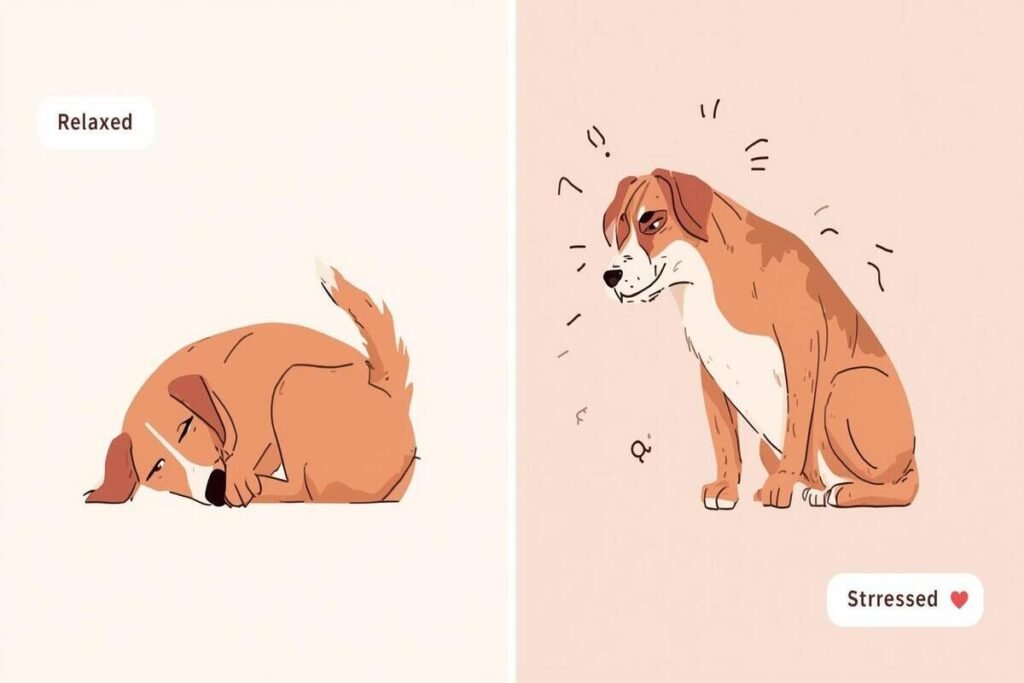
Dogs don’t say “I’m scared” with words—but their bodies speak clearly. Learning to read subtle cues helps you respond before small stress becomes big fear.
✅ Signs your dog is adjusting well:
- Loose, wagging tail (not stiff or high)
- Relaxed ears (not pinned back)
- Soft eyes (not wide or darting)
- Lying down calmly in your presence
- Eating and drinking normally
⚠️ Signs of stress (act gently if you see these):
- Lip licking or yawning (when not tired)
- Whale eye (showing the whites of the eyes)
- Hiding or freezing
- Panting without heat or exercise
- Refusing treats they usually love
If you notice stress signals, don’t punish or ignore them. Instead:
- Give space
- Lower your voice
- Turn sideways (less threatening than facing them head-on)
- Offer a calming activity like a stuffed Kong
Remember: stress isn’t disobedience. It’s communication. Respond with empathy, and you’ll teach your dog that you’re someone they can rely on.
Introducing Other Pets: Slow, Neutral, and Supervised
If you have cats, dogs, or other animals, introductions must be gradual, controlled, and positive.
Never let pets meet for the first time off-leash inside the house. Start outside, on neutral ground (like a backyard or quiet street).
For dog-to-dog meetings:
- Walk both dogs parallel to each other (not face-to-face)
- Keep leashes loose—tension transmits anxiety
- Let them sniff briefly, then redirect with a treat
- End the session before either gets overexcited
Repeat this 2–3 times over 2 days before trying indoors.
For dogs and cats:
- Keep the cat in a separate room with food, litter, and hiding spots
- Swap bedding so they learn each other’s scent
- Use baby gates for visual access before direct contact
- Always supervise early interactions
Key Insight: The goal isn’t friendship on Day 3—it’s peaceful coexistence. Some pets take weeks to warm up. That’s okay.
Building a Daily Routine: Predictability = Security
Dogs thrive on routine. Knowing what comes next—food, walk, nap—reduces anxiety and builds confidence.
Within 48 hours, establish a simple schedule:
- Morning: Potty break → breakfast → quiet time
- Afternoon: Short play or training session → nap
- Evening: Walk → dinner → calm bonding time
Keep meals, walks, and bedtime consistent—even on weekends. This predictability tells your dog: “This is my life now. I know what to expect.”
Include short, positive training sessions (2–5 minutes) using treats and praise. Teach one simple cue like “sit” or “touch.” Success builds confidence—and strengthens your connection.
Avoid: Long training marathons or correcting mistakes harshly. Focus on what they do right, not what they get wrong.
Handling Common Challenges: Accidents, Whining, and Hiding
Mistakes will happen. Your dog might pee on the rug, whine all night, or hide for hours. This isn’t failure—it’s part of the process.
For accidents:
Clean thoroughly with an enzymatic cleaner (regular cleaners leave scent trails). Never scold. Instead, increase potty breaks and watch for pre-potty signs (sniffing, circling).
For nighttime whining:
Ensure they’ve had a final potty break. Place their bed near you (but not on your bed yet). A white noise machine or soft music can mask scary sounds. Resist the urge to pick them up—it reinforces the behavior. Most dogs settle within 3–5 nights.
For hiding:
Let them stay in their safe zone. Toss treats nearby, but don’t force interaction. Read aloud softly—your voice becomes a comfort signal.
Remember: Every dog adjusts at their own pace. A former stray may take 3 weeks. A puppy from a loving breeder may take 3 days. Neither is “wrong.”
Special Considerations for Rescue Dogs or Seniors
Rescue dogs and seniors often carry invisible baggage—past neglect, trauma, or medical pain. They need extra patience.
For rescues:
- Assume they’ve never learned house rules
- Avoid sudden movements or loud noises
- Use positive reinforcement for every small win
- Consult a vet to rule out pain (which can mimic fear)
For seniors:
- Provide orthopedic bedding
- Adjust walk length and intensity
- Watch for signs of cognitive decline (confusion at night)
- Prioritize comfort over training
Heartfelt Note: These dogs may not show gratitude with exuberance—but when they finally sigh and lie down beside you? That’s trust earned. And it’s worth every quiet moment you gave them.

What NOT to Do in the First Week
Even well-meaning owners make these common mistakes:
❌ Throwing a “welcome party” – Too many strangers = overwhelming
❌ Bathing them immediately – Wait 5–7 days unless medically necessary
❌ Changing their food abruptly – Mix old and new food over 5 days to avoid upset stomach
❌ Leaving them alone for long periods – Start with 10–15 minutes, gradually increasing
❌ Correcting growling – Growling is communication, not aggression. Punishing it removes their warning system
When in doubt, ask: “Does this help my dog feel safe—or just make me feel better?”
Your 7-Day Welcome Plan (Simple & Actionable)
To make this easy, here’s a day-by-day guide:
Day 1:
- Confine to safe zone
- Quiet presence only
- Offer water and a small meal
Day 2:
- Begin short potty breaks
- Introduce one family member at a time
- No visitors
Day 3:
- Start basic routine (meals, walks)
- Begin scent swapping with other pets
Day 4:
- First supervised pet introduction (if applicable)
- Short training session (1 cue)
Day 5:
- Slightly expand access to home
- Add a calming toy or puzzle feeder
Day 6:
- Practice brief alone time (5–10 min)
- Gentle grooming session (brushing, nail check)
Day 7:
- Celebrate small wins!
- Plan first vet visit (if not done)
Bonus: Save this list! Print it or screenshot it—your future self will thank you.
When to Call the Vet (or a Behaviorist)
Most adjustment issues resolve with time—but some need professional help.
Call your vet if your dog:
- Doesn’t eat for more than 48 hours
- Has diarrhea or vomiting
- Shows signs of pain (limping, whimpering)
- Has discharge from eyes/nose
Consult a certified behaviorist if:
- They show aggression (growling, snapping) toward people
- They self-harm (excessive licking, biting)
- They don’t improve after 2–3 weeks of consistent routine
Early intervention prevents small issues from becoming big problems.
Final Thoughts: Patience Builds the Strongest Bonds
Bringing a new dog home isn’t about perfection—it’s about presence. You won’t get every moment right. There will be messes, sleepless nights, and moments of doubt. But every quiet sit beside you, every tentative tail wag, every time they choose to rest their head on your lap—that’s the foundation of something beautiful.
Your dog isn’t looking for a perfect owner. They’re looking for a safe one. And by taking these thoughtful steps, you’re already giving them exactly that.
So breathe. Trust the process. And remember: the best relationships aren’t built in a day—they’re built in a thousand small moments of kindness, consistency, and quiet understanding.
🐾 Now It’s Your Turn!
What surprised you most when you brought your dog home? Did they hide for days? Bond instantly? Share your story in the comments below—we’d love to hear how your new friend found their place in your heart (and your home).
And if this guide helped you, please share it with someone who’s about to welcome a new dog. You might just ease their journey, too.

Meu nome é Igor Silva e sou apaixonado por animais desde criança. Dedico meu trabalho a compartilhar informações confiáveis e práticas sobre cuidados, saúde e bem-estar de animais de estimação.