
Keeping your pet comfortable starts with good paw care. Many owners find a monthly session works for most breeds, but the real guide is wear and growth. If you hear a light click on hard floors or see nails extending past the toe pads, that is a clear sign to act.
Long nails can change posture and cause pain. They may curl under pads or invite infection. That affects walking, traction, and daily comfort.
In this guide you will learn how to judge timing, spot urgent issues, and build a simple at-home routine that keeps each nail short enough not to touch the ground while avoiding the sensitive quick. The aim is a calm, confident pet and fewer grooming surprises.
Key takeaways: A flexible schedule beats a fixed calendar; use wear and comfort as your cues; monthly is a common US baseline; safe care supports movement and prevents problems.
How often to trim dog nails based on your dog’s lifestyle
Match nail care with daily activity: a runner on asphalt needs far fewer sessions than a pup that lives mostly indoors. Use wear and comfort as your main signals rather than a strict calendar. Once a month is a useful starting point for many households in the United States, but you will likely fine‑tune from there.
The typical schedule most dogs follow in the US
Many dogs do well with checks and grooming around every 4 weeks. Grooming appointments at 6–8 week intervals work for some, but fast growers may need a home touch‑up between visits.
Why some dogs need trims every few weeks while others can wait longer
Hard surfaces like concrete and asphalt grind nails down naturally. Soft grass and dirt do not, so indoor pets or gentle walkers may need service several weeks sooner.
How senior dogs may need more frequent nail trimming
As dogs age and move less, natural wear drops. Front nails often grow faster than back ones. For seniors, check weekly and act sooner if nails start to touch the ground. Keeping nails short eases joint strain and improves comfort.
Signs your dog’s nails need trimming right now
A rhythmic click on hard floors is a fast, reliable cue that something needs checking. When you hear tapping on hardwood or tile, schedule a quick paw inspection.
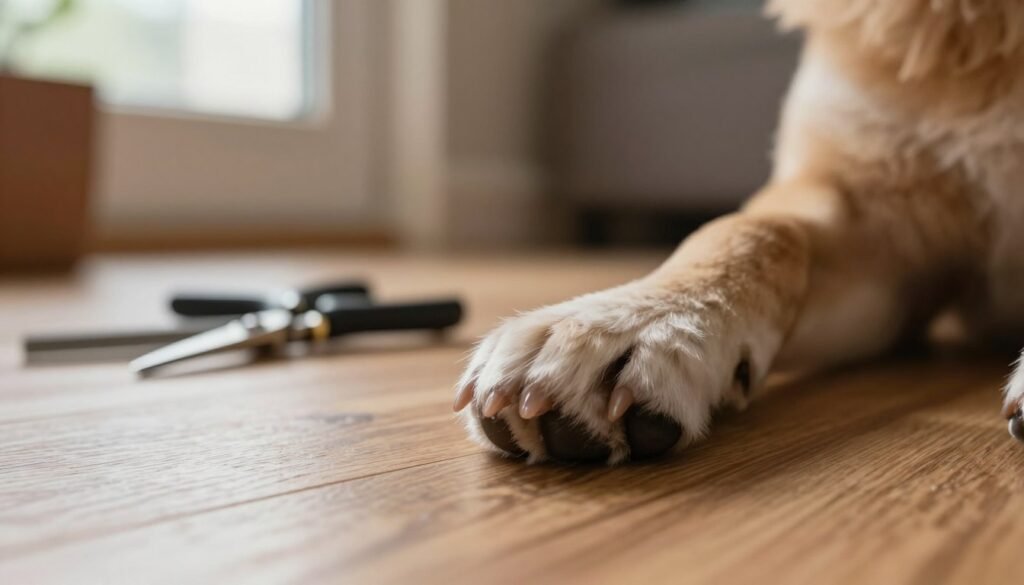
When you hear a tapping sound on hard surfaces
That noise is the simplest at‑home test. Let your pet walk across a hard surface; if you hear clicks, plan care soon rather than later.
When nails touch the ground or extend past the toe pads
Look at your companion while they stand. Nails should not press the ground or peek beyond the pad. A side view often shows overgrowth that the top view misses.
Problems caused by long nail growth
Even mild overgrowth can change stance and create discomfort. Weight shifts can cause joint pain and an altered gait.
“Long nails can curl into the pad and raise the chance of tearing, bleeding, and infection.”
Snags and breaks are common with long nail tips. Those wounds can lead to infection and make future sessions harder for both of you.
When it becomes urgent: clicking, visible overreach, limping, or avoidance of walks mean act now — don’t wait for the next groom.
What changes your nail trim schedule between grooming visits
Simple changes in where your companion walks can shift your grooming rhythm. Small shifts in daily routes, weather, or being carried change wear and when you act.
Walking surfaces that naturally file tips
Pavement, asphalt, and concrete grind down quicker than grass. If your pet spends lots of time on sidewalks or patios, you may need fewer trims. Hard ground does much of the work for you.
Indoor time, soft ground, and being carried more often
Carpet, lawn, and dirt do not wear claws as fast. If you carry your companion often, expect quicker growth. Rainy weeks with fewer walks will also shift your schedule forward.
Front claws versus back and uneven growth
Front paws usually grow faster than rear ones. Dewclaws and single problem nails can get long while others stay short. Watch each paw and trim dog parts as needed rather than assuming all match.
Quick check: do a short weekly look and listen test. That helps you catch the odd nail out before it causes discomfort.
Tools and setup to trim dog nails safely at home
A careful setup and the proper tools make nail upkeep simpler and safer. Start by picking a bright, quiet spot where you both relax. Keep everything close so you do not fumble and raise stress.
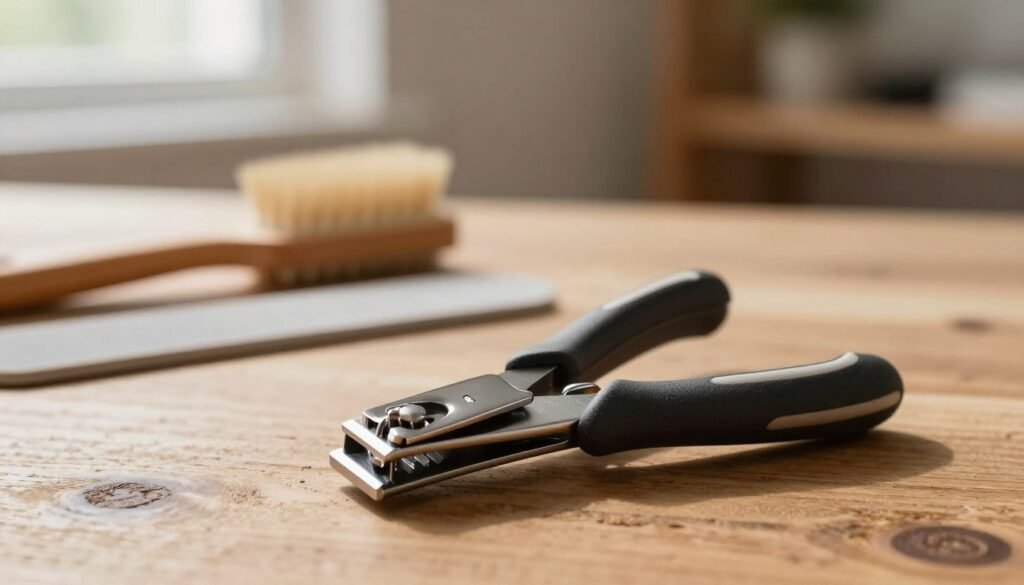
Choosing clippers by size and thickness
For small pets, scissor-style clippers (example: Frisco®) work well. Large breeds need plier-style cutters like Millers Forge® for strong, thick nails. Avoid guillotine models if you are unsure; vets often warn they can hide the cutting line and cause quick cuts.
Nail grinder versus clippers
Electric grinders such as Dremel® file and shape black tips with control. They shine when you can’t see the quick, but they make noise and may unsettle jumpy pets. Use clippers if your companion stays calm; they are faster and familiar for most owners.
Calm space and using treats
Set soft lighting and a non-slip surface. Offer small treats during handling and tool exposure. Reinforcing calm behavior builds a positive association and lowers stress. If you feel unsure or the nail is severe, call a groomer or vet for help.
Safe nail trimming process you can follow at home
Start with short, calm handling sessions so paw care becomes a normal part of your routine. Keep each step slow and predictable and reward calm behavior frequently. This builds trust and makes nail trims easier over time.
Desensitize paws and introduce tools
Touch and massage legs, pads, and toes daily. Let your puppy or adult sniff clippers or a grinder, then touch the foot with the tool before any cutting. Pair each exposure with small treats so the device becomes routine.
Comfortable position and steady support
Keep your companion in a natural, supported pose. Avoid lifting the leg beyond its normal range. A helper can hold steady while you work with clippers or a grinder.
Find the quick and cut in small stages
On clear nails the quick shows as pink; stop before that area. For dark nails, remove tiny slices until a dark dot appears — then stop. Cut at about a 45° angle and work slowly so you reduce the risk of hitting the quick.
Dewclaws, filing, and handling mistakes
Always check dewclaws — they rarely wear down naturally and may need frequent nail trims. File rough edges after clipping so nails trimmed won’t snag. If you cut too short, apply styptic powder or use flour/cornstarch to stop bleeding and stay calm. If blood won’t stop, contact your veterinarian.
“Small, frequent sessions will help the quick recede over weeks, making future nail trims safer and shorter.”
Conclusion
Aim for short tips that don’t make noise on hard floors and that stay clear of the pads when your dog stands. That simple rule keeps posture normal and reduces discomfort over your pet’s life.
Regular care prevents pain, gait changes, torn tips, and the higher risk of infection. Senior dogs may need closer checks since lower activity speeds growth and affects comfort.
Schedules shift with seasons, surfaces, and activity. Rely on signs rather than a strict calendar. Keep sessions brief and positive — a few cuts at a time build trust and steady progress.
Safety first: swelling, redness, limping, or persistent bleeding mean call your veterinarian rather than pushing through at home. With calm handling and consistent grooming, nail care becomes a small habit that supports your pet’s quality of life.

Meu nome é Igor Silva e sou apaixonado por animais desde criança. Dedico meu trabalho a compartilhar informações confiáveis e práticas sobre cuidados, saúde e bem-estar de animais de estimação.