
You’ll learn a simple, practical plan that helps you figure out a starting amount of food and turn it into real meal portions that fit your routine.
There isn’t one perfect number for every pup. Needs change with weight, age, activity level, and health. Still, you can get a dependable starting point and adjust from there.
This guide focuses on a healthy body condition, steady energy, and consistent stools rather than just finishing the bowl. It explains label charts, ideal weight, calorie-to-cup math, meal splits, and fine-tuning with a body condition score.
You’ll also see separate notes for puppies, adults, and seniors, plus answers to common questions about feeding schedules, free-feeding, and changing portions safely. Use this as a friendly roadmap for better nutrition and long-term health.
Why the Right Daily Portion Matters for Your Dog’s Health
Daily portion size matters more than brand name when you want a steady, healthy body for your pet. Overfeeding is common: nearly 59% of dogs are overweight or obese, and extra calories pile up quietly.
Too many calories increase breathing trouble, stress joints, and raise arthritis risk. A little extra each day creates slow weight gain that is easy to miss until shape and mobility change.
Underfeeding risks
Too little food or poor nutrient balance shows as low energy, dull coat, GI upset, and weaker immune response. Your goal is the right amount per day for life stage and activity—not one scoop for every dog.
“Treats and toppers count. They can push a planned diet past the finish line if you don’t include them.”
Practical tip: track totals, include snacks, and use a consistent plan. If you need a baseline, use the feeding chart and then adjust for results.
What to Gather Before You Calculate Your Dog’s Food Per Day
Start with accurate numbers. Get a recent weight from your vet or a home pet scale so you can track progress instead of guessing. Note the target weight your vet recommends — that is your ideal body weight and it matters more than a temporary reading.
Next, read the food label. Find kcal per cup or per can and the feeding chart on the bag or insert. Charts usually match weight ranges to cups per day, but calorie density varies by formula, so use the kcal figure when you convert portions.
Write down life stage (puppy, adult, senior), typical activity level, and any health issues that change calorie needs. These details shape the daily plan and prevent one-size-fits-all guesses.
Finally, record the chosen feeding schedule and the starting amount you’ll use. Share this list with everyone in the household so dog feeding stays consistent and results are easy to track.
How much to feed my dog: A Step-by-Step Method You Can Follow
A systematic approach — label chart, ideal weight, calorie math, and monitoring — keeps portions on track.
Start with the label chart
Use the feeding chart on your dog food bag as the baseline. That chart matches that formula’s kcal and nutrients, so it beats guessing.
Choose ideal weight, not current weight
If your pet is overweight or thin, pick the row for ideal weight. This prevents you from “feeding the weight problem” and sets a healthy target amount.
Convert calories into cups
Do the math: daily calories needed ÷ kcal per cup = cups per day. This works if you mix wet and dry food or two formulas.
Split the daily total and adjust
Divide the daily total into meals that fit your schedule. For many adults, two meals keep intake steady and easier to monitor.
Adjust in small steps. Change portions slowly and watch waistline, rib feel, energy, stool quality, and body condition. Count treats and toppers in the daily total.
Confirm with your veterinarian if medical issues exist or you need major changes. A quick check keeps the plan safe and effective.
Factors That Change How Much Food Your Dog Needs Each Day
A dog’s daily intake shifts with life stage, activity, and physical condition—watch for those signals.
Age and life stage
Puppies grow rapidly and need more calories and protein per pound than an adult dog. Split their meals and use a growth formula until they reach the target adult weight.
Seniors often slow down. Reduce calories gradually if they gain, or raise quality protein if muscle loss shows.
Size, breed, and body weight
Breed tendencies matter. Small, active breeds burn energy faster than many giant breeds. Two dogs at the same body weight can have very different calorie needs.
Activity and lifestyle
A couch companion needs far fewer calories than a highly active or working dog. Match portions to actual activity level, not just weight on the scale.
Reproductive and health status
Spayed or neutered pets often need fewer calories after surgery. Pregnancy and nursing raise needs sharply and require vet guidance.
Body condition and food density
Use body condition score as your real-world check. If ribs are hard to feel or the waist is gone, reduce portions. If the dog looks thin, increase them.
Finally, remember that cups vary by formula. Always compare kcal-per-cup on the label when you switch foods.
“Watch the body, not the scoop—measure results and adjust.”
Adult Dog Feeding Guidelines by Weight: Using Charts the Smart Way
Charts on adult formulas turn vague advice into usable portions by matching body weight to cups per day.
Read charts as “cups per day,” not per meal. After you pick the correct row for ideal weight, divide that daily total by how many meals you give each day.
Example adult ranges by body weight (cups per day)
For an average-calorie kibble (~382 kcal per cup), typical chart ranges look like this:
3–12 lb: ½–1¼ cup.
13–20 lb: 1¼–1⅔ cups.
21–35 lb: 1⅔–2⅓ cups.
36–50 lb: 2⅓–3 cups.
51–75 lb: 3–3¾ cups.
76–100 lb: 3¾–4⅔ cups.
What the “over 100 pounds” line means
Most charts give a base for 100 lb, then add a small amount per extra weight. For the example above:
Over 100 lb: 4⅔ cups + ¼ cup per each additional 10 lb.
This makes scaling simple when your pet is very large.
When to adjust the label recommendation
Use the chart row for ideal weight, not current weight if your pet is over or under condition. That prevents feeding the wrong target.
Raise portions for very active or working adults. Lower them for low-activity, senior, or sterilized pets. Variation can reach ±50% from label estimates in some cases.
“Track weight and body condition for 2–4 weeks before changing portions again.”
Puppy Feeding Guidelines: Growth, Breed Size, and Target Adult Weight
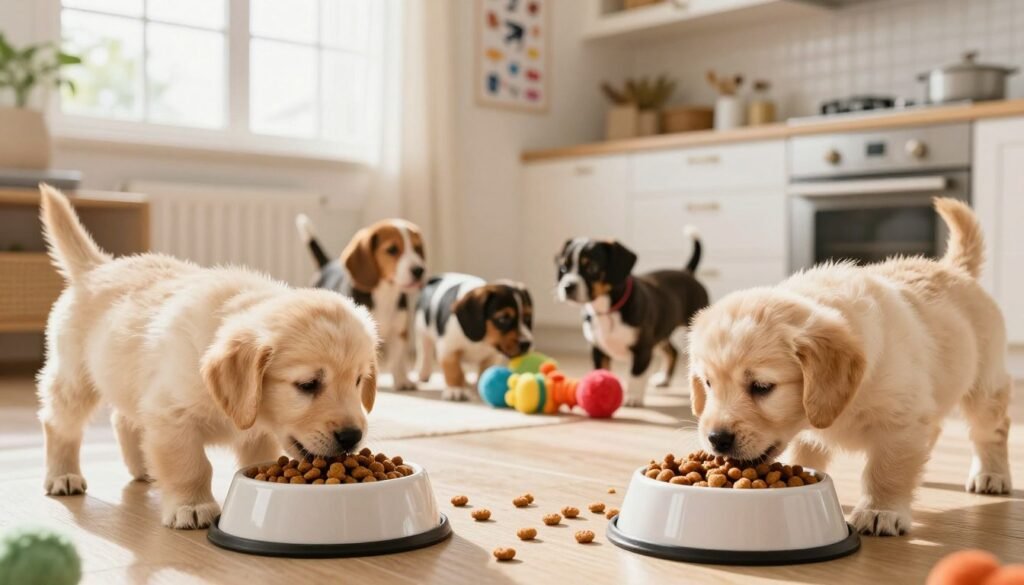
Young dogs need denser calories and protein, which makes their daily portions higher than you might expect. Rapid growth and high metabolism demand more energy and building blocks per pound than an adult.
Why growth requires extra nutrients
Puppies burn energy fast and build muscle, bone, and organs. That means more protein, vitamins, and minerals in each cup of food.
Calories support growth; quality protein and calcium balance support healthy structure.
Small/medium versus large and giant breeds
Small and medium size pups need dense nutrition for quick maturity. Large and giant breeds need a specific large-breed puppy formula.
Large-breed formulas help control growth rate and protect joints. Check timing and portions with your veterinarian.
How puppy charts use age and expected adult weight
Puppy charts pair current age with expected adult weight to set daily amounts. Use the row that matches your pup’s target size, not just current weight.
Practical example and quick workflow
Example: a puppy food at 406 kcal per cup. Find the chart range for your pup’s age and target adult size. Convert the kcal needed per day into cups: daily calories ÷ 406 = cups per day.
Split that total into multiple meals and reassess weight weekly or biweekly as growth is fast.
“Use the expected adult weight and age on the chart, then adjust often as your pup grows.”
Senior Dog Feeding Guidelines: Supporting Healthy Weight and Mobility
As pets age, their daily needs shift, and simple changes in portions can protect weight and keep joints moving.
When is a dog “senior”? Size matters. Large breeds often enter senior years around 7–8 years, while toy breeds may not be seniors until about 12. Use age plus visible condition at home to decide when to review portions.
Why fewer calories often help. Activity often drops and metabolism slows. If portions stay the same, weight increases and joint stress follows. Many senior formulas lower calories while adding joint-support nutrients.
If weight falls unexpectedly, act. Unplanned weight loss can signal illness. Don’t simply cut food; check with your veterinarian before major changes.
Use a senior chart as a baseline: match ideal weight to cups per day, then split into meals. For example, a 423 kcal/cup senior formula might list ranges from ⅓–1 cup for tiny dogs up through 4 cups plus extras for >100 lb.
“Measure changes slowly and weigh your dog more often—small shifts are easier to manage and spot.”
How Many Times a Day Should You Feed Your Dog?
A clear meal rhythm makes portion control simpler and life easier for you and your pup. Most healthy adult dogs do best with two meals each day. This schedule helps you measure the daily amount and spot appetite or stool changes quickly.
Typical adult schedule
Serve the daily total in two equal meals. For example, if the chart says 2 cups per day, give 1 cup at each meal.
Puppy frequency by age and size
Puppies need more frequent meals. Young pups often take three or four feedings daily.
Toy breed pups may need 4–5 small meals until around four months, then reduce gradually as they grow.
Splitting the daily amount
Divide the day’s cups by the number of meals you choose. Keep portions consistent and measure with the same cup each time.
Consistent timing trains appetite and makes monitoring weight easier.
Why free-feeding can backfire
Free-feeding removes portion control and raises the risk of overeating and obesity. It also hides gradual weight gain.
Some picky eaters will graze; still measure the per day total so you know actual intake and can adjust if needed.
“Consistent meals give you control; scheduled feeding helps spot changes early.”
How to Tell If You’re Feeding the Right Amount
Small, regular checks make it easy to spot when the daily food needs a tweak.
Body condition checkpoints
Look for a visible waist from above and a slight tuck behind the ribs. You should feel ribs with light pressure, not see them protruding.
Steady energy through the day is another sign the amount supports overall health. Use a body condition score to fine-tune portions.
Stool quality and appetite cues
Firm, consistent stools usually mean the diet and amount suit your pet. Loose or very hard stools can signal intolerance or that you need a portion change.
Begging or extra interest in food does not always mean low calories; behavior and learned habits play a role.
How fast to change portions
Adjust in small measured steps — for example, 5–10% of the daily total — and hold that change for 2–4 weeks while you track weight trends.
Weigh regularly and focus on trend rather than a single reading. Re-check body condition after lifestyle shifts like less exercise, season changes, or after spaying or neutering.
“Track simple signs — waist, ribs, stool, and energy — and let trends guide portion changes.”
If you see worrying weight loss, poor stool, or low energy, consult your veterinarian before making big diet moves. A quick check keeps feeding safe and effective.
Conclusion
Begin with your food’s feeding chart, then refine amounts based on real results. Pick the row for ideal weight, convert calories into cups when needed, and split the daily total into the meals you keep.
Watch body shape, stool quality, and steady energy as you adjust. Treats count toward the daily total and can push calories past your goal if unmeasured.
Remember that needs change with age, activity, and health. Revisit portions after major shifts in lifestyle or life stage and review the key factors that affect intake.
Partner with your veterinarian for personalized guidance, especially for puppies, seniors, pregnancy, or medical concerns. Dialing in the right amount supports healthy weight, better energy, and more active years together.

Meu nome é Igor Silva e sou apaixonado por animais desde criança. Dedico meu trabalho a compartilhar informações confiáveis e práticas sobre cuidados, saúde e bem-estar de animais de estimação.