
You’ve probably seen the photos: gleaming white dog teeth, fresh breath, a happy pup grinning like a model. But if your dog growls, hides, or even snaps when you reach for their mouth, you’re not failing as a pet parent—you’re facing one of the most common, yet rarely discussed, challenges in dog care.
Here’s the hard truth: over 80% of dogs develop dental disease by age three. Left unchecked, it leads to chronic pain, tooth loss, and even heart or kidney damage. Yet fewer than 2% of owners brush their dog’s teeth daily. Why? Because it feels impossible.
But what if it didn’t have to be a battle?
Brushing your dog’s teeth isn’t about scrubbing plaque—it’s about building trust. With the right approach, you can turn this into a calm, even bonding, part of your routine.
In this guide, you’ll discover a vet-approved, force-free method to make dental care safe, effective, and stress-free—for your dog’s health and your relationship. No coercion. No drama. Just practical steps that work, even for dogs who hate it.
Ready to transform this chore into care?
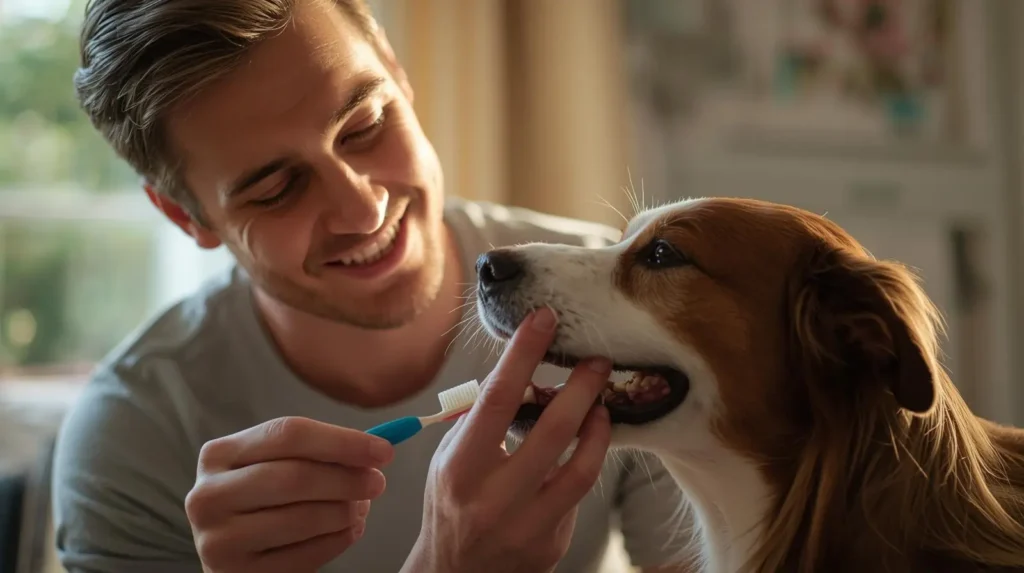
Why Dental Health Is a Silent Emergency
Let’s start with a myth: “Bad breath is just normal for dogs.”
It’s not.
That “doggy breath” you’ve come to accept? It’s often the first sign of periodontal disease—a painful infection that starts with plaque buildup and escalates silently. By the time your dog shows obvious discomfort, significant damage has already occurred.
Here’s what happens:
- Within hours of eating, bacteria form a sticky film called plaque on teeth.
- If not removed, plaque hardens into tartar within 48 hours.
- Tartar irritates gums, causing gingivitis (red, swollen, bleeding gums).
- Eventually, bacteria invade the roots, leading to tooth loss and bone erosion.
Worse, those bacteria don’t stay in the mouth. They enter the bloodstream, potentially damaging the heart, liver, and kidneys.
Yet, dental disease is nearly 100% preventable with consistent home care.
The problem? Most owners wait until their dog is in pain—when professional cleaning under anesthesia is the only option. But anesthesia carries risks, especially for seniors or dogs with preexisting conditions.
That’s where daily brushing changes everything. It’s not about perfect technique. It’s about consistency. Brushing just 3–5 times per week removes plaque before it hardens, stopping the cycle before it starts.
And yes—it’s possible, even if your dog hates it today.
As Dr. Lisa Lippman, a NYC-based veterinarian, puts it: “Dental health isn’t a luxury. It’s part of basic care, like feeding or walking.”
So let’s stop seeing this as a chore—and start seeing it as an act of love.
Because your dog’s mouth holds more than teeth. It holds their comfort, their joy in eating, and their long-term health.
The #1 Mistake That Makes Brushing Impossible
Before we talk about solutions, let’s address the elephant in the room: why most brushing attempts fail.
The biggest mistake? Starting with a toothbrush.
Imagine someone suddenly shoving a bristly tool into your mouth without warning. You’d flinch, right? Now imagine you couldn’t say “no”—and you’ve had bad experiences with hands near your face before. That’s your dog’s reality.
Most owners skip the foundational step: desensitization. They go straight to scrubbing, which feels invasive, scary, and threatening. As a result, their dog associates brushing with fear—and resistance grows.
But here’s the good news: you can rebuild trust.
Dogs learn through association. If touching their mouth predicts something good (like chicken or cuddles), they’ll start to lean in—not pull away.
The key is to go slower than you think you need to. Rushing guarantees failure. Patience guarantees progress.
This isn’t about obedience. It’s about emotional safety.
Think of it like teaching a child to floss. You wouldn’t hand them string and say “go.” You’d model it, make it fun, and celebrate small wins.
Your dog deserves the same grace.
So forget the toothbrush for now. In the next section, we’ll walk through a gentle, 4-week plan to make mouth handling feel safe—even for rescue dogs with trauma histories.
Because when your dog feels safe, cooperation follows.
And that’s where real dental care begins.
Your 4-Week Desensitization Plan
This isn’t a quick fix. It’s a relationship-building journey. But in just 4 weeks, you can transform fear into willingness—if you follow this vet-recommended plan.
Week 1: Build Positive Associations with Your Hands
- Choose calm moments (after a walk or nap).
- Gently stroke your dog’s muzzle and cheeks with your fingers.
- Immediately offer a high-value treat (boiled chicken, cheese, or peanut butter).
- Repeat 2–3 times daily for 20–30 seconds.
- Goal: Your dog looks forward to your hands near their face.
Week 2: Introduce Lip Lifting
- While petting, gently lift one side of the lip to expose front teeth.
- Touch only the teeth with your fingertip—no pressure.
- Reward instantly. Stop before your dog pulls away.
- Goal: Comfort with lip handling.
Week 3: Add Texture with Gauze or Finger Brush
- Wrap a soft gauze pad around your finger or use a silicone finger brush.
- Gently rub the outer surfaces of the front teeth in small circles.
- Keep sessions under 30 seconds. Always end with a treat.
- Goal: Acceptance of mild friction.
Week 4: Transition to a Toothbrush
- Use a soft-bristled dog toothbrush or infant toothbrush.
- Apply a pea-sized amount of enzymatic dog toothpaste (poultry or beef flavor).
- Brush only the outer surfaces of the upper teeth for 10 seconds per quadrant.
- Goal: Full brushing session (30–60 seconds total).
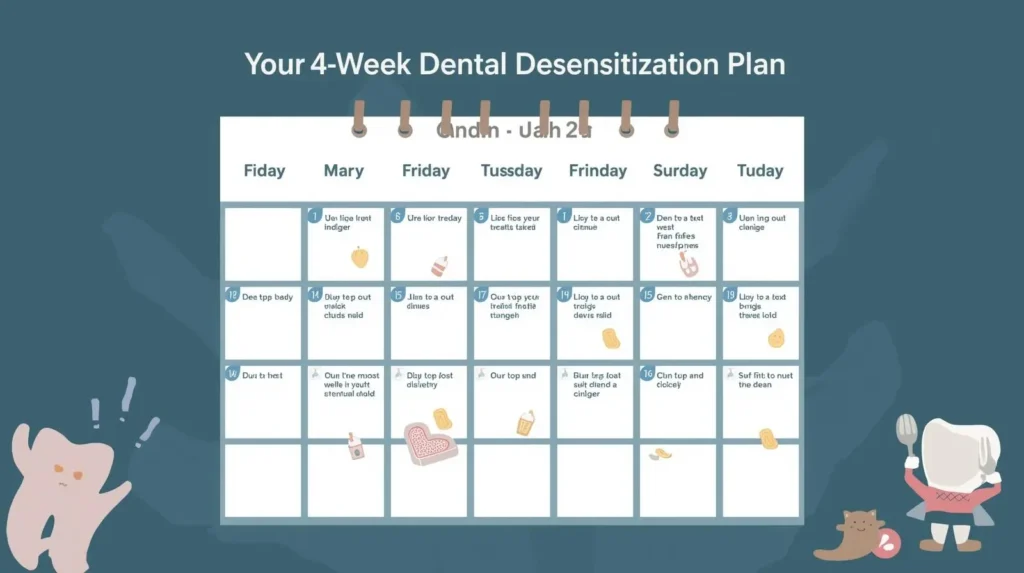
Important: If your dog shows stress (lip licking, yawning, turning away), go back a step. Progress isn’t linear—and that’s okay.
This plan works because it respects your dog’s pace. And in doing so, it builds something even more valuable than clean teeth: trust.
Step-by-Step Brushing Technique That Works
Now that your dog accepts mouth handling, let’s talk technique. The goal isn’t perfection—it’s effective plaque removal with zero force.
Step 1: Choose the Right Tools
- Toothbrush: A small, soft-bristled brush (dog-specific or human infant size).
- Toothpaste: Never use human toothpaste (fluoride is toxic). Use enzymatic dog toothpaste in flavors like poultry or peanut butter.
Step 2: Pick the Right Time
Brush when your dog is relaxed—after exercise, not before meals. Avoid high-energy moments.
Step 3: Master the Angle
- Hold the brush at a 45-degree angle to the gumline.
- Focus only on the outer surfaces of the upper teeth (where 90% of plaque builds).
- Use gentle, circular motions—no scrubbing.
Step 4: Keep It Short
- 10 seconds per quadrant (front left, front right, back left, back right).
- Total time: 30–60 seconds. Less is more if your dog is new to this.
Step 5: Reward Generously
End with praise, play, or a special treat. Make it a ritual they look forward to.
Pro Tip: If your dog resists back teeth, start with just the front 4 teeth. Build from there.
Remember: Consistency beats duration. Brushing 3x/week for 30 seconds reduces plaque by 70%. Daily “perfect” sessions aren’t necessary—and often backfire.
As one client told me: “My rescue used to bite at the brush. Now he sits and opens his mouth when he sees it. It took 6 weeks—but it was worth it.”
Your turn starts today. One gentle touch at a time.
Products That Actually Work (And Which to Skip)
Not all dental products are created equal. Some are backed by science. Others are just clever marketing.
✅ What’s Proven to Work
- Enzymatic toothpaste: Breaks down plaque chemically—even with light brushing. Look for brands like Virbac C.E.T. or Petsmile (VOHC-approved).
- Soft-bristle brushes: Cause less gum irritation. Angled heads (like Virbac’s) help reach back teeth.
- Dental wipes: Better than nothing for resistant dogs (but 50% less effective than brushing).
- VOHC-approved chews: Greenies, Purina DentaLife, or Hill’s Prescription Diet t/d. These reduce plaque through mechanical action.
❌ What’s Overhyped (or Risky)
- Water additives: Minimal evidence of effectiveness. Most dogs get clean water from other sources, diluting the product.
- Homemade “natural” toothpaste: Baking soda is alkaline and can upset stomachs. Coconut oil lacks plaque-fighting enzymes.
- Hard plastic chew toys: Can fracture teeth—opt for soft rubber instead.
- Human toothpaste: Contains xylitol or fluoride, which are toxic to dogs.
How to Choose
- For beginners: Start with a finger brush + enzymatic paste. Less intimidating.
- For small dogs: Use an infant toothbrush—gentler on tiny mouths.
- For seniors: Try dental gels (like OraVet) if brushing is too painful.
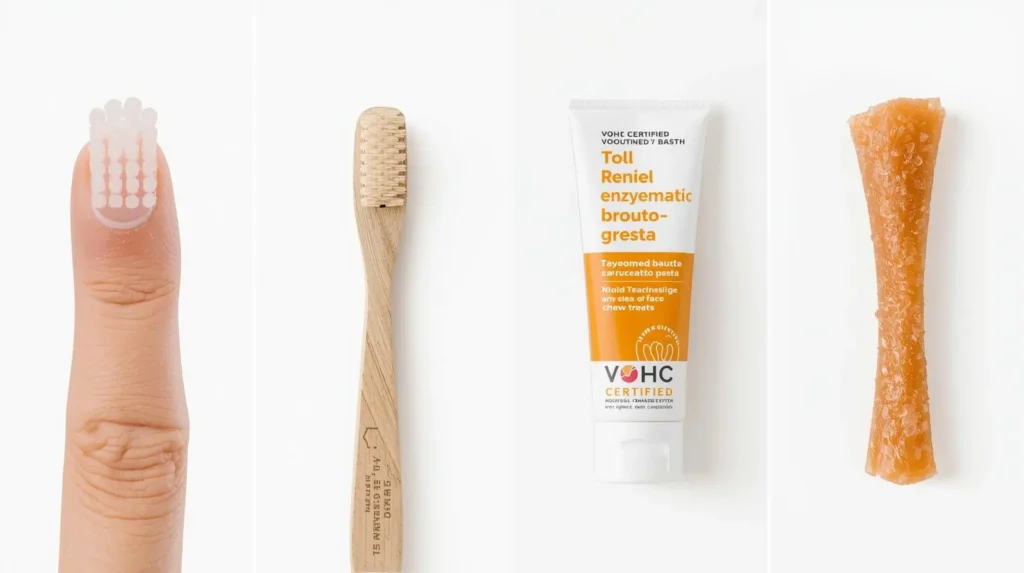
Always introduce new products during calm times—not during brushing. Let your dog sniff and lick first.
And remember: no product replaces brushing. They’re supplements, not solutions.
When in doubt, ask your vet for brand recommendations. Many clinics sell trusted products at cost.
Because when it comes to your dog’s health, cutting corners isn’t worth the risk.
Special Cases: Puppies, Seniors, and Fearful Dogs
One size doesn’t fit all. Your approach must adapt to your dog’s age, breed, and history.
Puppies (8 weeks–6 months)
- Start early! Puppies are like sponges for new experiences.
- Use a damp cloth or finger brush—no toothpaste needed until 6 months.
- Keep sessions playful: “Open wide for a treat!”
- Benefit: They’ll accept brushing for life.
Adult Dogs (1–7 years)
- Most responsive to desensitization.
- Focus on consistency over perfection.
- If they have existing tartar, schedule a vet cleaning first—brushing over tartar hurts.
Seniors (7+ years)
- May have sensitive gums or loose teeth.
- Use extra-soft brushes and go slower.
- Never brush if gums are bleeding—see a vet first.
- Consider dental diets or sealants as alternatives.
Fearful or Aggressive Dogs
- Go back to Week 1 of desensitization—even if it takes months.
- Work with a fear-free certified trainer or veterinary behaviorist.
- In extreme cases, ask your vet about dental sealants (like OraVet) that last 6 months.
Brachycephalic Breeds (Pugs, Bulldogs, Frenchies)
- Their crowded teeth trap more plaque.
- Use finger brushes for better control.
- Prioritize frequency (5x/week) over duration.
Key Principle: Meet your dog where they are. A 10-second session with a senior dog is better than forcing a 2-minute battle.
As Dr. Sophia Yin, a pioneer in fear-free handling, said: “You can’t train a dog who’s scared. You can only scare a dog who’s being trained.”
So lead with patience. The results will follow.
What NOT to Do (Even If It Seems Logical)
Good intentions can backfire. Here are common mistakes—even well-meaning owners make:
❌ Don’t Scold or Punish
If your dog growls or pulls away, they’re communicating fear—not disobedience. Punishing them teaches them to hide warning signs, not cooperate.
❌ Don’t Use Human Toothpaste or Baking Soda
Fluoride, xylitol, and baking soda can cause vomiting, seizures, or worse. Always use dog-specific products.
❌ Don’t Skip Vet Check-Ups
Brushing complements professional care—it doesn’t replace it. Annual dental exams catch problems early.
❌ Don’t Aim for “Perfect” Cleaning
You’re not a dental hygienist. Focus on the outer surfaces of upper teeth—that’s where plaque builds most.
❌ Don’t Force the Mouth Open
This triggers panic. Instead, let your dog choose to participate. Say, “Open for a treat?” and reward any lip lift.
❌ Don’t Brush Right After Meals
Wait 30 minutes. Acidic saliva post-meal can weaken enamel.
❌ Don’t Give Up After One Bad Session
Progress isn’t linear. If your dog has an off day, go back to finger touching and rebuild.
Remember: Your dog isn’t being “difficult.” They’re reacting to a real, overwhelming sensation.
As one vet tech told me: “The dogs who resist brushing the most are often the ones in the most pain. Be gentle.”
So trade force for patience. Trade frustration for curiosity.
Because trust isn’t built in perfect sessions—it’s built in the moments you choose kindness over control.
Long-Term: Making Dental Care a Lifelong Habit
Brushing isn’t a one-time task. It’s a lifelong commitment—but it doesn’t have to feel like a chore.
Build a Routine
- Tie brushing to an existing habit: “After I pour my coffee, I brush Max’s teeth.”
- Keep supplies in an accessible spot (not buried in a cabinet).
- Use a habit tracker: a simple calendar with checkmarks builds momentum.
Track Progress Visually
- Take monthly photos of your dog’s teeth. You’ll see real improvement—whiter teeth, healthier gums.
- Celebrate milestones: “30 days of brushing!” = special toy or outing.
Involve the Whole Family
- Teach kids to touch the muzzle (with supervision).
- Rotate who brushes—variety keeps it fresh.
Pair with Positive Experiences
- Always end with play, cuddles, or a walk.
- Use brushing time to check for lumps, ticks, or ear issues.
When Life Gets Busy
- Missed a day? No guilt. Just resume.
- On vacation? Pack a travel brush and mini toothpaste.
- Too stressed? Do a 10-second “maintenance brush” to keep the habit alive.
Reassess Annually
- At your dog’s vet check-up, ask: “How’s his dental health?”
- Adjust your routine based on age or health changes.
The Bigger Picture
This isn’t just about teeth. It’s about presence. In a world of distractions, those 30 seconds of focused care say: “You matter to me.”
And over time, that builds a bond no treat can buy.
Because the dogs we care for the most aren’t the easiest—they’re the ones we choose to show up for, day after day.
Even when it’s hard.
Real Stories: From Fear to Trust
Sometimes, the best motivation comes from others who’ve walked this path.
Case 1: Luna, the Rescue with a History of Abuse
Luna growled if anyone touched her face. Her owner, Maria, almost gave up—until she tried the 4-week desensitization plan.
“Week 1 was just petting her cheeks. Week 3, she let me lift her lip. By Week 6, she’d sit and open her mouth for the brush. Last month, her vet said she has the cleanest teeth in the clinic.”
Key: Patience + high-value treats (rotisserie chicken).
Case 2: Buster, the 12-Year-Old Lab
Buster’s breath was so bad, his family avoided cuddling. His owner, James, started with dental wipes, then moved to a soft brush.
“He’s old, so I only do 20 seconds. But his breath improved in 2 weeks—and he licks my face again!”
Key: Short sessions + vet-approved gel for sensitive gums.
Case 3: Coco, the French Bulldog
Coco’s crowded teeth turned black by age 2. Her owner, David, combined brushing with VOHC chews.
“I brush 4x/week and give a Greenie daily. At her last check-up, zero new tartar.”
Key: Consistency + dental diet support.
These aren’t “perfect” dogs. They’re loved dogs whose owners chose to show up—even when it was messy.
As Maria put it: “It wasn’t about clean teeth. It was about proving I was safe.”
And that’s the heart of it.
Because when your dog trusts you with their mouth, they’re trusting you with their vulnerability.
And that’s a gift worth protecting.
Conclusion
Let’s recap what we’ve covered:
- Dental disease affects 80% of dogs by age three—but it’s preventable.
- Desensitization (not force) is the key to stress-free brushing.
- A 4-week plan builds trust, even in fearful dogs.
- Enzymatic toothpaste and soft brushes are your best tools.
- Special cases (puppies, seniors, brachycephalic breeds) need tailored approaches.
- Avoid common mistakes like human toothpaste or punishment.
- Consistency beats perfection—30 seconds, 3x/week, makes a difference.
- Real dogs (like Luna, Buster, and Coco) prove it’s possible.
Brushing your dog’s teeth isn’t about achieving a Hollywood smile. It’s about honoring their trust and protecting their long-term health.
So start small. Be patient. Celebrate progress—not perfection.
Your dog doesn’t need you to be perfect. They just need you to be present.
💬 Your Turn:
Have you tried brushing your dog’s teeth? What worked—or didn’t? Share your story in the comments below. Together, we can make dental care less scary for every dog.

Meu nome é Igor Silva e sou apaixonado por animais desde criança. Dedico meu trabalho a compartilhar informações confiáveis e práticas sobre cuidados, saúde e bem-estar de animais de estimação.