
Most dog owners only notice the obvious. These five subtle signals are the ones that matter most — and the ones that get missed the most.
Dogs are brilliant at hiding discomfort. It’s not stubbornness or indifference — it’s instinct. In the wild, showing weakness made an animal vulnerable. So even the most pampered house pet has kept that ancient habit: mask the pain, keep going, act normal.
That means the signals your dog sends when something is wrong are almost never loud or obvious. They’re quiet. Easy to dismiss. Easy to misread as “just a phase” or “probably nothing.” And by the time the signs become impossible to ignore, the problem is often much more serious — and much more expensive to treat.
The good news is that once you know what to look for, these signals aren’t hard to spot. You don’t need veterinary training. You just need to know your dog and pay attention to the right things. In this article, we’ll walk through the five most overlooked signs that your dog may need more care than they’re currently getting — and what you can realistically do about each one.
If you’ve ever looked at your dog and had a vague sense that something was “off” without being able to explain why, this article is for you.
7 in 10health problems in dogs are caught too late
3×cheaper to treat early-stage conditions
80%of dogs have dental disease by age 3
Why Dogs Hide Health Problems
Before diving into the signs themselves, it’s worth understanding why this is even a problem in the first place. After all, if your dog is hurting, why wouldn’t they show it?
The answer goes back thousands of years. Dogs descended from wolves, and in the wild, a visibly sick or injured animal became a target — either for predators or for displacement within the pack. Animals that could mask pain and continue functioning had a survival advantage. That behavior became deeply wired into canine instinct.
Domestication changed a lot of things, but it didn’t rewire this instinct. Your dog still defaults to hiding discomfort — especially chronic, low-grade issues that developed gradually. They adapt to the new normal. They compensate. They keep wagging their tail.
This is exactly why the absence of obvious symptoms doesn’t mean your dog is fine. It often just means the problem hasn’t crossed the threshold of what they can no longer hide.
Understanding this changes how you approach observation. Instead of waiting for your dog to limp dramatically or cry in pain, you start watching for the subtle shifts in behavior, energy, and habits that reveal what’s actually going on.
Sign #1 — A Shift in Energy That’s Hard to Explain
Warning Sign 01
Unexplained energy changes
Your dog used to bound to the door when you grabbed the leash. Now they take a moment. They’re still happy — just noticeably less bouncy. You’ve chalked it up to aging, the weather, or a long week. But subtle energy drops are one of the first signs the body sends when something isn’t right.⚠ Moderate to high priority
Energy changes in dogs can signal dozens of different conditions — from anemia and hypothyroidism to chronic pain, early cardiac issues, or even dental disease (yes, tooth pain causes fatigue). The tricky part is that the shift is usually gradual enough that it feels like a normal part of life.
What to Actually Watch For
The key isn’t just “less energetic.” It’s a change from your dog’s personal baseline — whatever is normal for them. Signs to note include:
- Taking longer to get up after sleeping
- Less interest in toys or games they previously enjoyed
- Lagging behind on walks they used to lead
- Sleeping more than usual across multiple days
- Reduced enthusiasm at mealtimes
None of these alone is cause for immediate alarm. But if two or more persist for more than a week, it’s worth a vet conversation. Energy is one of the most reliable barometers of overall health — when it changes, something has changed.
Sign #2 — Bad Breath That Gets Worse Over Time
Warning Sign 02
Worsening bad breath
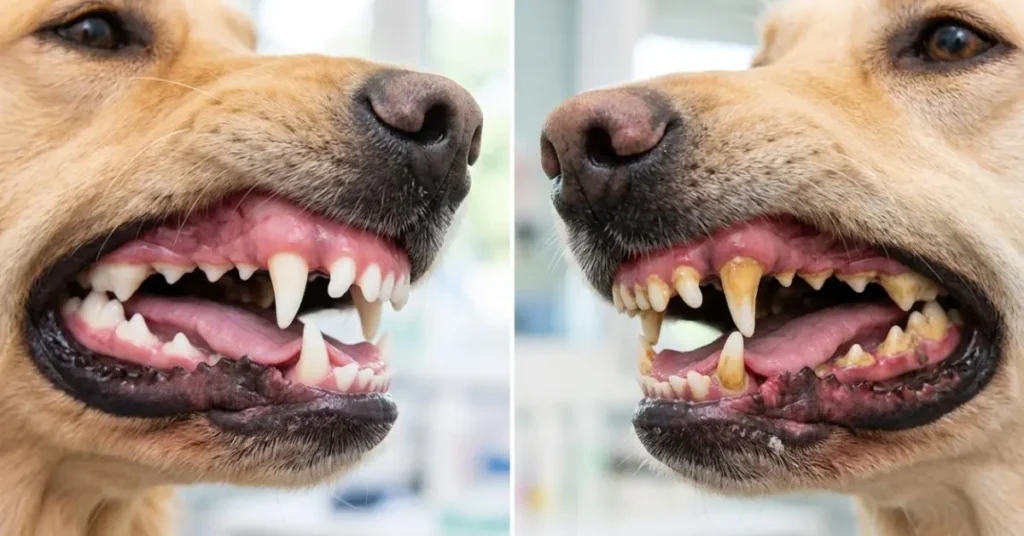
There’s a widespread belief that dog breath is just supposed to smell bad. It isn’t. While a dog’s mouth will never smell like mint, a significant or worsening odor is a clear sign of dental disease — the most commonly underdiagnosed condition in companion animals.⚠ Affects 80% of dogs over age 3
Periodontal disease doesn’t stay in the mouth. The bacteria from infected gums and teeth can enter the bloodstream and cause inflammation in the kidneys, liver, and heart. What starts as “dog breath” can quietly become a systemic health issue over months and years.
Other Dental Warning Signs
Bad breath is the most obvious signal, but watch for these as well:
- Chewing on one side — often a sign of tooth pain on the other side
- Dropping food or eating more slowly — chewing is uncomfortable
- Pawing at the mouth — direct sign of oral discomfort
- Brown or yellow buildup on teeth — visible tartar accumulation
- Swollen or bleeding gums — already at an advanced stage
The good news: dental disease is almost entirely preventable with consistent home care. If you have a French Bulldog, their compressed jaw makes them especially prone to this — our guide on how to brush a French Bulldog’s teeth without stress walks through the process step by step.
Sign #3 — Changes in the Way They Move
Warning Sign 03
Subtle movement changes
Your dog isn’t limping — but something looks slightly different. They hesitate before jumping onto the couch. They sit down a little awkwardly. They take the stairs more carefully than they used to. These micro-changes in movement are among the most reliable early indicators of joint or spinal issues.⚠ Common in dogs over 4 years
Joint problems, hip dysplasia, and spinal issues like intervertebral disc disease (IVDD) all begin with subtle mobility changes long before they become obvious. By the time a dog is visibly limping, the condition has typically been developing for months.
Movement Patterns Worth Monitoring
Observe your dog on a regular basis — especially first thing in the morning, before they’ve warmed up. Stiffness is often most pronounced after rest. Here’s what to look for:
- Slow to rise after sleeping or lying down
- Reluctance to jump onto furniture or into a car they used to access easily
- Uneven gait — subtle favoring of one leg
- Bunny hopping — using both back legs together when running, often a sign of hip dysplasia
- Sitting to one side instead of straight — can indicate lower back or hip discomfort
Certain breeds carry significantly higher risk for specific joint conditions. French Bulldogs, Dachshunds, and Corgis are highly prone to spinal disc problems. Labradors, German Shepherds, and Golden Retrievers commonly develop hip dysplasia. Knowing your dog’s breed-specific risks changes how you interpret these signals.
Sign #4 — Eating Changes You’ve Been Ignoring
Warning Sign 04
Appetite and weight shifts
A dog eating a little less one day is usually nothing. A dog consistently eating less — or more — over two or more weeks is a meaningful signal. So is unexplained weight gain or loss when the diet hasn’t changed. These shifts in appetite and body composition point toward metabolic, hormonal, or digestive changes that deserve attention.⚠ Warrants veterinary evaluation
Weight changes in dogs are easy to miss because they happen gradually. An extra kilogram on a large dog barely shows. But on a Chihuahua or a Dachshund, even half a kilogram creates measurable extra stress on joints and organs.
The Body Condition Score — A Simple Home Check
Vets use a Body Condition Score (BCS) to assess whether a dog is at a healthy weight. You can do a simplified version at home:
- Run your hands along your dog’s ribcage. You should be able to feel each rib easily with light pressure — but not see them.
- Look at your dog from above. You should see a visible waist — an inward curve between the ribs and hips.
- Look from the side. The belly should tuck upward toward the hips, not hang level or sag.
If you can’t feel the ribs at all, your dog is likely overweight. If you can see them clearly without pressing, they may be underweight. Both are worth addressing — and neither is normal, even if it’s been that way for a while.
What your dog eats matters just as much as how much. For dogs with sensitive systems — especially French Bulldogs — understanding which foods support health and which cause harm is foundational. Our article on forbidden foods for French Bulldogs covers this in detail if your dog is a Frenchie.
Sign #5 — Behavioral Shifts That Came Out of Nowhere
Warning Sign 05
Unexplained behavior changes
You know your dog. You know how they react to the doorbell, whether they’re a morning dog or an evening dog, how they greet you after work. When those patterns shift — when your social dog becomes withdrawn, or your calm dog becomes anxious — something has changed. Behavior is your dog’s primary language. When it shifts, listen.⚠ First sign in 6 of 10 diagnoses
Dogs in chronic pain or discomfort often show it first through personality changes rather than physical symptoms. A dog that growls when touched in a new place isn’t being aggressive — they’re communicating pain. A dog that suddenly hides or clings is often experiencing anxiety or physical discomfort they can’t escape from.
Behavioral Red Flags to Take Seriously
- Sudden aggression or growling when touched in specific spots — pain response
- Increased clinginess or separation anxiety with no clear trigger
- Withdrawal from the family — seeking isolation, avoiding usual gathering spots
- Excessive licking or chewing of a specific area — localized pain or irritation
- Disrupted sleep patterns — getting up repeatedly, restlessness overnight
- Loss of interest in play with dogs they previously enjoyed
Any of these behaviors, especially when new and persistent, should prompt a conversation with your vet. You don’t need to have a diagnosis to make that call — the behavioral shift itself is enough reason.
💡 Practical Tip: Keep a simple note on your phone — even just a few words — when you notice something that seems off. Date it. Over two weeks, patterns become visible that are otherwise easy to forget or rationalize away. This log is also genuinely useful to share with your vet.
When to See a Vet — and When to Wait

Not every observation requires an emergency vet visit. Part of being a good dog owner is developing judgment about what’s urgent and what can wait for a scheduled appointment. Here’s a simple framework:
Go to the Vet the Same Day If You See:
- Pale, white, blue, or yellow gums
- Difficulty breathing or labored panting at rest
- Collapse or sudden inability to stand
- Suspected poisoning or ingestion of a toxic substance
- Severe, repeated vomiting or bloody diarrhea
- Trauma — hit by a car, fall from height, animal attack
Schedule an Appointment Within a Few Days If You Notice:
- Any of the 5 signs discussed in this article, persisting for more than one week
- A new lump or swelling
- Changes in bathroom habits — frequency, color, consistency
- Excessive scratching, licking, or hair loss
- Cloudy eyes or discharge
For a more comprehensive guide on reading these signals, our article on signs your dog may need to see a vet soon goes deeper into urgent versus non-urgent situations.
The Weekly Observation Habit
The single most effective thing you can do for your dog’s long-term health isn’t a supplement, a special diet, or a fancy gadget. It’s consistent, informed attention.
Set aside five minutes once a week — maybe Sunday mornings — to run through a simple mental checklist. Touch their coat and skin. Look at their eyes and ears. Watch them walk. Note their energy. Check their gums. This kind of regular observation builds a detailed internal picture of what’s normal for your specific dog, which makes the abnormal much easier to catch.
📋 Weekly Dog Health Observation Checklist
› Energy level is normal for them — no unexplained fatigue
› Gums are pink and moist — not pale, yellow, or dry
› Eating and drinking normally — no sudden changes
› Moving comfortably — no hesitation, stiffness, or limp
› Eyes clear — no cloudiness, redness, or discharge
› Ears clean — no odor, excessive scratching, or dark discharge
› Coat and skin look healthy — no excessive shedding or irritation
› Behavior is consistent with their personality — no withdrawal or new anxiety
If you answered “I’m not sure” to more than two of these, it’s worth a closer look — or at the very least, a conversation with your vet at the next routine visit.
🐾 Part 2 of this series
Your Dog’s Health Risks Depend on Their Breed — Here’s How to Know Yours
General signs are only part of the picture. In Part 2, we break down the specific health risks tied to the most popular dog breeds — and show you a smarter way to track and prevent them.Read Part 2 →
Why Breed Matters More Than Most Owners Realize
The five signs above apply to every dog. But how they show up — and what they’re likely pointing to — varies enormously by breed. A French Bulldog with labored breathing is not facing the same issue as a Labrador with the same symptom. A Dachshund that hesitates before jumping is sending a very different signal than a Golden Retriever doing the same thing.
Breed-specific health profiles exist for a reason. Centuries of selective breeding have concentrated certain traits — and certain vulnerabilities. Understanding which risks your specific dog carries makes every observation more meaningful and every preventive decision more targeted.
For Frenchie owners specifically, understanding what makes this breed unique is the starting point. Our article on fun facts about French Bulldogs covers personality and breed characteristics that help put their health signals in context. And knowing how to maintain their ears — a surprisingly common source of problems — is covered in detail in our guide on how to clean a French Bulldog’s ears safely at home.
In Part 2 of this series, we go deeper: the specific health risks of the most popular breeds, what early warning signs look like for each, and how to build a personalized health monitoring routine that actually works for your dog.
Conclusion
Your dog trusts you to notice what they can’t say out loud. That’s not a dramatic responsibility — it’s actually a simple one, once you know what to look for. The five signs we covered in this article — changes in energy, dental warning signs, movement shifts, appetite fluctuations, and behavioral differences — are the quiet signals that matter most.
None of them require you to be a veterinarian. They just require you to be present, consistent, and willing to take the small things seriously before they become big things. Most health problems that get caught early are manageable. Most that get caught late are not.
The weekly checklist at the end of this article is your starting point. Use it. Adjust it as you learn what’s normal for your specific dog. And when something feels off — even if you can’t quite explain why — trust that instinct. You know your dog better than anyone else does.
In Part 2, we take this further: breed-specific risk profiles, how to personalize your dog’s health monitoring routine, and a smarter approach to prevention that goes beyond generic advice.
Is Your Dog Getting the Care Their Breed Actually Needs?
General advice only goes so far. Part 2 shows you how to create a breed-specific health plan — and the tool that makes it easier than ever. Continue to Part 2 →
Free to read · No signup required
Track Your Dog’s Health by Breed — Free App
Get personalized alerts, health checklists, and breed-specific care tips — all in one place. No guesswork, no generic advice. Download the Free App →
Free to download · Works for all breeds
Share what you observed and how it turned out in the comments below — your experience could help another dog owner catch something important before it’s too late.
Free · Works on iPhone and Android · No signup required

My name is Igor Silva and I’ve been passionate about animals since childhood. I dedicate my work to sharing reliable, practical information about pet care, health, and well-being.