
Keeping your furry friend’s belongings fresh is essential for their health and happiness. Regular maintenance prevents germs from building up on surfaces your pet contacts daily.
Dirty items can harbor bacteria that may lead to skin irritations or breathing problems. This guide offers simple methods using safe products that protect your companion.
Proper care extends the life of these items while keeping them smelling fresh. You’ll find tips for various materials, from plush toys to different types of beds.
With the right approach, this process fits easily into your routine. Natural solutions like vinegar work well without harsh chemicals.
Good drying techniques prevent mold and maintain item quality. Starting with hair removal makes the washing more effective too.
We provide practical advice every pet parent can use. Your entire family will appreciate a cleaner, healthier environment.
Key Takeaways
- Regular cleaning prevents bacteria buildup on pet items
- Dirty beds and toys can cause health issues for dogs
- Using pet-safe products protects your animal’s wellbeing
- Proper maintenance extends the lifespan of pet accessories
- Natural disinfectants like vinegar are effective alternatives
- Correct drying methods prevent mold growth
- Pre-cleaning steps make the washing process more efficient
Why Cleaning Your Dog’s Bed and Toys Matters
Maintaining your pet’s sleeping area and playthings isn’t just about appearance. It’s a vital practice that directly impacts wellness for everyone in your home.
Health Benefits for Your Pet and Family
Dirty pet items become breeding grounds for bacteria. These germs can lead to skin infections or breathing problems for your furry companion.
Studies show that zoonotic diseases like Salmonella can spread through infected bedding. This puts your entire family at risk.
Allergens like dander and dust mites accumulate quickly. Regular washing removes these irritants, helping everyone breathe easier.
Parasites present another concern. Research found fleas in 14% of pets’ sleeping areas, even outside peak seasons.
“Proper maintenance of animal accessories prevents numerous health issues while promoting a safer environment.”
Dirty toys harbor saliva and germs. When chewed, these can transfer directly into your dog’s system.
Extending the Lifespan of Pet Items
Regular care keeps beds soft and fluffy. It eliminates unpleasant odors that develop from daily use.
Removing oils and dirt prevents premature wear and tear. This preservation saves money by reducing replacement needs.
Proper drying techniques stop mold and mildew growth. These fungi can permanently damage materials over time.
Using pet-safe products maintains item integrity. It avoids skin irritation while keeping everything in better condition.
Overall, a consistent cleaning routine creates a healthier home. Both your four-legged friend and human family members benefit.
How to Clean Your Dog’s Toys Effectively
Playthings require different care approaches based on their materials. Following proper methods keeps them safe and extends their usefulness.
Fabric and Plush Toy Care
Place soft items in a mesh laundry bag before washing. This protects them during the cycle.
Use cold water and gentle settings. These prevent damage to squeakers and stuffing.
Avoid bleach and fabric softeners. They can irritate skin or harm materials.
Air drying works best for these items. It prevents melting and ensures complete dryness.
Rubber and Plastic Toy Maintenance
Scrub these with warm water and pet-safe dish soap. This removes dirt and grime effectively.
Soak in equal parts white vinegar and water for disinfection. This natural solution kills germs safely.
Rinse thoroughly after cleaning. No residue should remain before returning to play.
Always air dry completely. Moisture trapped inside could cause mold issues.
Rope and Tug Toy Preservation
Shake out debris before washing. This removes loose hair and dirt particles.
Pre-soak in warm water with detergent if heavily soiled. It helps loosen stubborn grime.
Machine wash in a mesh bag on gentle cycle. This prevents tangling and damage.
Avoid harsh chemicals that leave residues. Your companion might ingest these during chewing.
Natural Disinfection Techniques
White vinegar serves as an excellent alternative to bleach. It disinfects without harmful chemicals.
Soak items for 15-20 minutes in vinegar solution. This effectively eliminates odors and germs.
Rinse well after disinfecting. No vinegar smell should remain on surfaces.
Always choose pet-safe products. They protect your animal’s wellbeing during cleaning.
| Toy Type | Cleaning Method | Drying Time | Frequency |
|---|---|---|---|
| Fabric/Plush | Machine wash cold, gentle cycle | 4-6 hours air dry | Every 2 weeks |
| Rubber/Plastic | Scrub with soap, vinegar soak | 2-3 hours air dry | Weekly |
| Rope/Tug | Machine wash in bag, gentle cycle | 6-8 hours air dry | Every 2 weeks |
Clean playthings every two weeks for most pets. Increase frequency if used outdoors or by animals with allergies.
Proper maintenance prevents bacteria buildup. It keeps items fresh and safe for daily use.
Following these instructions ensures effective cleaning. Your furry friend will enjoy cleaner, healthier toys.
Step-by-Step Guide to Cleaning Your Dog’s Bed
Following a structured approach ensures your companion’s sleeping area stays fresh and hygienic. Proper techniques preserve materials while eliminating germs effectively.
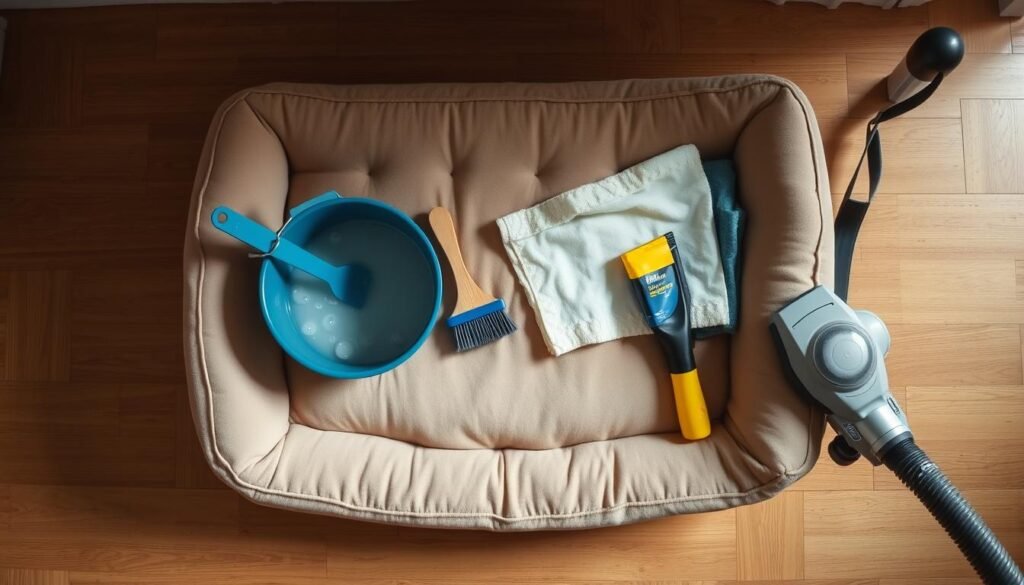
Removing Pet Hair and Debris
Begin by thoroughly eliminating all loose particles from the sleeping surface. Use a vacuum cleaner or specialized pet hair remover tool for best results.
This crucial step prevents washing machine clogs during the cleaning process. It also ensures detergent penetrates deep into the fabric fibers.
Pay special attention to corners and seams where debris accumulates. Heavy shedding animals may require extra pre-cleaning attention.
Washing with Pet-Safe Detergent
Always check manufacturer instructions before beginning the laundry process. Most bedding items handle machine washing on gentle cycles perfectly.
Select warm water settings and quality pet-safe detergent without harsh fragrances. These products protect sensitive skin while effectively removing dirt.
Place the entire item inside a protective mesh laundry bag before starting the cycle. This simple step prevents damage and ensures even cleaning distribution.
Avoid bleach and strong chemicals that could irritate your animal’s skin. Natural alternatives like vinegar work wonderfully for disinfection.
For non-machine washable items, hand wash in a tub with soapy water and vinegar solution. Thorough rinsing removes all residue completely.
“Proper pre-treatment and gentle washing methods extend the lifespan of pet bedding while maintaining its comfort and support.”
Drying Methods to Avoid Damage
Air drying represents the safest option for preserving your pet’s sleeping area. This method prevents shrinkage and maintains structural integrity.
Avoid high heat settings in dryers that could damage materials. Thick bedding may require extended drying time to prevent mold formation.
Check for complete dryness before returning the item to your companion. Moisture trapped inside could lead to mildew issues over time.
Following these steps keeps your furry friend’s resting place fresh and comfortable. Regular maintenance becomes an easy part of your routine care.
How Often Should You Clean Dog Beds and Toys?
Establishing a consistent maintenance routine keeps your companion’s items fresh and hygienic. The right schedule depends on several factors unique to your household.

Factors Influencing Cleaning Frequency
Your pet’s lifestyle plays a major role in determining washing needs. Outdoor adventures and playtime introduce more dirt and germs.
Animals with oily coats require more frequent attention to their sleeping area. These natural oils can transfer to bedding and create odors.
Family allergies might necessitate increased maintenance schedules. Reducing dander and dust helps everyone breathe easier.
Heavy usage items demand more regular care than occasionally used ones. Daily playthings accumulate saliva and debris faster.
“Tailoring your cleaning routine to your dog’s specific needs ensures optimal hygiene without unnecessary effort.”
Recommended Cleaning Schedules
Most veterinary experts suggest washing sleeping surfaces weekly. This frequency aligns with CDC recommendations for parasite control.
Indoor pets with minimal shedding might maintain freshness with monthly care. Always adjust based on visible soiling or odors.
Playthings generally benefit from biweekly attention. Increase this to weekly if used extensively outdoors.
Dogs with skin sensitivities often require more frequent maintenance. Their items may need washing every few days during flare-ups.
Regular visual inspections help determine when items need care. Look for visible dirt, unusual smells, or moisture.
Consistent maintenance prevents stubborn stain formation. It also extends the lifespan of your pet’s favorite items.
| Pet Type | Bed Cleaning | Toy Cleaning | Special Considerations |
|---|---|---|---|
| Indoor/low shedding | Monthly | Every 2 weeks | Adjust if odors develop |
| Outdoor/active | Weekly | Weekly | Check for debris after outdoor use |
| Oily coat breeds | Weekly | Weekly | May need extra detergent |
| Allergy sufferers | Weekly | Twice weekly | Use hypoallergenic products |
Remember that these are general guidelines rather than strict rules. Your specific situation might require adjustments to these timeframes.
Proper timing makes the laundry process more effective. It also ensures your companion always has clean, comfortable items.
Conclusion
Maintaining a regular routine for your companion’s accessories brings lasting benefits. Consistent care reduces bacteria and allergens, keeping everyone healthier.
Following proper washing instructions extends item lifespan. Always use pet-safe detergent and avoid harsh heat settings.
Pre-cleaning removes pet hair and debris before machine washing. Natural solutions like white vinegar work wonders against odors.
Establishing a schedule based on your dog’s habits makes upkeep easier. Your furry friend will enjoy a fresher, cozier environment.
Start today for a happier home and a healthier pet!
FAQ
Can I put my dog’s bed in the washing machine?
Many dog beds are machine washable, but always check the care label first. For beds with removable covers, wash the cover separately. Use a gentle cycle with warm water and a pet-safe detergent to protect the fabric and your furry friend.
What’s the best way to remove pet hair from a bed before washing?
Use a lint roller or a rubber glove—dampen it slightly and wipe the surface. A vacuum with an upholstery attachment also works wonders for lifting hair and debris from the bed before it goes into the laundry.
How do I clean plush toys without damaging them?
Place fabric or plush toys in a pillowcase and tie it closed before putting them in the washing machine. Use cold water and a mild detergent, then air dry to keep them looking and feeling like new for your pup.
Is it safe to use bleach on my dog’s items?
Avoid bleach, as it can irritate your dog’s skin and leave harmful residues. Instead, use a mixture of white vinegar and water or baking soda for disinfecting. These natural options tackle odors and stains without the risk.
How often should I wash my dog’s bed and toys?
It depends on your dog’s habits, but a good rule is to wash the bed every 1–2 weeks and clean toys weekly. If your dog has allergies or loves muddy adventures, you might need to clean more frequently to keep everything fresh.
What’s the best way to dry a dog bed after washing?
Air drying is often safest to prevent shrinking or damage. If the care instructions allow, use a dryer on low heat. Make sure the bed is completely dry before giving it back to your dog to avoid mildew or unpleasant smells.

My name is Igor Silva and I’ve been passionate about animals since childhood. I dedicate my work to sharing reliable, practical information about pet care, health, and well-being.