
Bathing keeps your pup clean and gives you a quick health check. You can spot irritation, ticks, or lumps while washing away dirt and odor.
Keep water lukewarm and handle gently. That prevents skin irritation and makes the session calm. A good routine includes prepping supplies, choosing a spot, and using treats or a lick mat to keep focus.
Start by brushing, protect the ears, shampoo the body and clean the face with a damp cloth. Rinse thoroughly and dry well so hair doesn’t trap moisture. Most pups need a bath every 4–8 weeks, based on coat and activity, while some dogs need more or less.
Key Takeaways
- Set up supplies and pick a spot that fits your pup’s size.
- Use lukewarm water and gentle handling for comfort and safety.
- Follow a clear step sequence: brush, protect ears, shampoo, rinse, dry.
- Use treats or a lick mat to reinforce calm behavior during the process.
- Check skin and coat during bathing for early signs of issues.
- Schedule baths by coat type and lifestyle to avoid dry skin.
Before you start: What you’ll achieve with this bath time
Plan this bath time around a few simple wins: a clean coat, a fresh scent, and a calm check of skin and pads. These goals keep the process short and useful.
You’ll define success for the session: remove dirt and odor, inspect for irritation or lumps, and build a positive link with water and handling. That sets expectations for both of you and keeps stress low.
Set the space up before you call your pup in. Place a non-slip mat, pre-stage everything need—shampoo, towels, brush, and treats—within arm’s reach. Make sure water is lukewarm and low flow from the start.
If your pet has chronic skin issues, check with the vet about special shampoos or schedules. Decide how you’ll reward progress during and after the process, and keep praise frequent.
- Quick health scan while wet
- Station set so you never step away
- Gentle handling and planned treats for confidence
Everything you’ll need for a stress-free dog bath
Gather the right supplies first so you stay calm and efficient. You’ll stage items where your dry hand can reach them: a dog-formulated shampoo, optional conditioner, detangler, and ear cleaner if the vet recommends it.
Make sure bottles are open and any dilution instructions are read ahead of time. Use a brush matched to your pup’s coat to remove mats and loose fur before water tightens tangles.
Tools and setup
- Non-slip mats in the tub and on the floor for steady paws and safe footing.
- A grooming loop or leash to secure the dog if they try to hop out.
- Two to three large absorbent towels: one on the floor for traction, two for drying.
Keep ear cleaner on standby only if your vet suggests routine ear care. Stock high-value treats so you can reward calm behavior while you handle paws, ears, and the body. This staging cuts stress and speeds the whole bath up.
Where to bathe your dog: sink, tub, shower, outdoor, or self-service station
Choose the right spot first. That saves time and keeps the session calm for both of you.
Kitchen sink for small dogs
The sink works well for tiny breeds and puppies. Block the disposal and use a low-pressure sprayer if you have one.
Benefits: waist-height access, quick rinse, less bending. Use a rubber mat so paws stay steady.
Bathtub or shower for medium and large breeds
Large dogs fit best in a tub or shower. Add a hair catcher to protect drains from heavy hair and tangles.
Keep water lukewarm and use low pressure. Let the water drain rather than filling the tub to keep footing stable.
Yard baths with hose or warm buckets
Outdoor washing works when weather is mild. Secure a grooming loop to a fence or stake so the pup can’t bolt.
In hot weather test the hose first; in chilly weather use warm buckets. This protects coat and skin temperature.
Self-service stations and pro options
Consider a self-service station for waist-high tubs, included shampoo, and built-in dryers. You do less cleanup and save time.
“Pick the location that matches your space and the coat type—short coats often rinse well in a shower; long coats need room and a sprayer.”
| Location | Best for | Key tip | Drain/hair advice |
|---|---|---|---|
| Kitchen sink | Small dogs, puppies | Use a mat and sprayer | Plug off disposal |
| Tub or shower | Medium and large dogs | Low pressure, lukewarm water | Install a hair catcher |
| Yard | Active, muddy dogs | Secure with grooming loop | Test hose temp; use warm buckets if cold |
| Self-service | All sizes, convenience seekers | Waist-high tubs, dryers | No cleanup after use |
- Match the spot to the pup’s size and coat.
- Keep water temperature steady and pressure low.
- Protect drains from hair with a strainer.
How to keep your pup calm during bath time
Calm prep is the secret: a short walk, a lick mat, and steady cues set the tone for a low-stress session.
Positive reinforcement: treats, lick mats, and calm voice
Use high-value treats or a lick mat smeared with peanut butter to hold attention while you set tools out.
Reward small wins: treat for stepping on a non-slip mat, another for entering an empty tub, and praise for staying still.
Slow, steady handling to reduce stress
Introduce towels, buckets, or the sprayer gradually. Let the pup sniff each item and reward calm interest.
Work from neck and chest toward the back so sensitive areas aren’t startled. Keep contact steady and predictable.
- Consider a short walk first to burn energy and ease fidgeting.
- Keep sessions brief at first and build time slowly.
- Use a cue-and-reward loop—sit, treat, praise—to redirect nervous energy.
- End with a big reward so dogs remember the experience positively.
| Technique | Why it helps | Quick tip |
|---|---|---|
| Pre-walk | Reduces excess energy | 10–15 minutes before the session |
| Lick mat or treats | Creates a positive link with water and touch | Use peanut butter on a slow-feeding mat |
| Gradual tool intro | Prevents surprise and fear | Let pup investigate dry items first |
Water temperature and pressure: lukewarm, low flow, safe and comfy
Set a lukewarm stream and low pressure; that simple change calms most pets fast. Lukewarm protects sensitive skin and keeps the experience pleasant for both of you.
Hot water can dry or scald. Cold water can stress or even risk hypothermia if the session runs long. Test the water on your forearm and adjust as needed while you work.
Keep the flow gentle. A soft spray feels like a massage. Avoid sudden hot cold shifts by running outdoor hoses until their temperature evens out or using warm buckets in cool weather.
Watch body language—shivering, panting, or pulling away are signs you should change pressure or temperature. Aim the stream from chest toward the tail first. Use a wet cloth around the head and ears rather than direct spray.
| Risk | What to do | Quick tip |
|---|---|---|
| Too hot | Stops quickly; use lukewarm mix | Test on forearm before contact |
| Too cold | Warm buckets or wait for hose to cool | Shorten exposure; dry promptly |
| High pressure | Lower flow; use hand-held sprayer or cup | Rinse like a gentle massage |
How to bathe your dog correctly: a step-by-step process
Tackle knots and loose hair before any water touches the coat—wet fur tightens tangles. Start with a quick brush so shampoo reaches the skin. Remove mats; they become painful once wet.
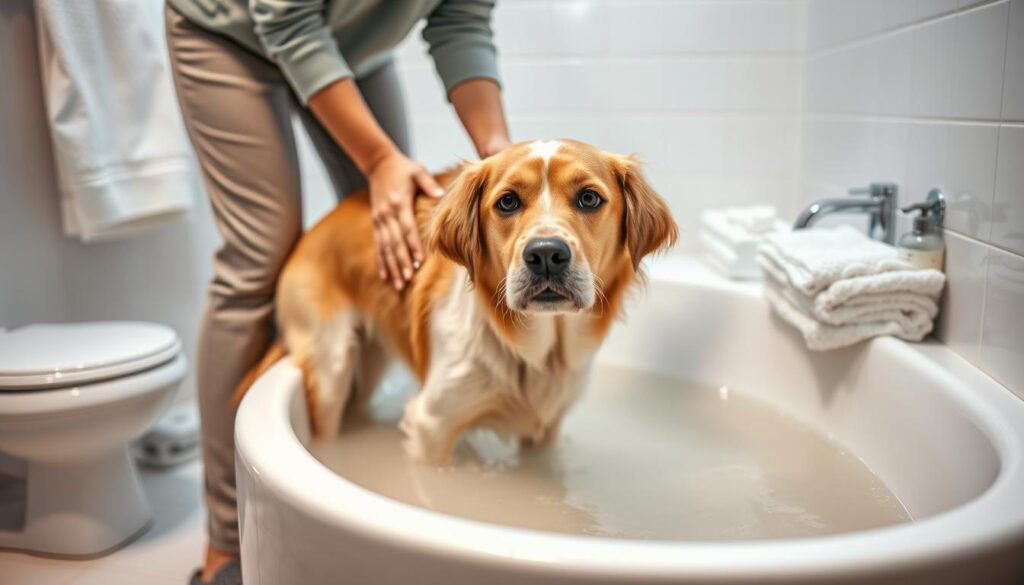
Secure and prep
Secure the pup with a grooming loop if needed and gently place cotton in the ears to block moisture. Keep treats handy for calm cooperation.
Wet, lather, and protect the face
- Wet the coat with lukewarm, low-pressure water from neck and chest toward the tail—save the head for last.
- Apply dog shampoo per label and lather the body, paws, and undercarriage. Avoid the eyes and nose.
- Clean the dog face with a damp cloth or face-safe cleanser, taking care around the eyes.
- Rinse until water runs clear, then rinse again. Feel under armpits and belly for hidden soap.
- For long coats or dry skin, apply conditioner and rinse thoroughly.
- Remove ear cotton before drying and reward with treats and praise.
Drying your dog: towels, air drying, and safe tools
Efficient drying begins the moment you step out of the tub: set a towel under paws and start blotting.
Use large absorbent towels first. Wrap and gently press to lift water away from the coat and fur. Change towels when soaked so drying stays effective.
Place one towel on the floor for traction before your pup shakes or exits the tub. This reduces slips and keeps water off the floor.
Efficient towel technique and keeping warm indoors
Blot rather than rub—rubbing can tangle hair and irritate skin. Focus on dense spots like the chest, armpits, and tail where moisture hides.
Most dogs air dry fine indoors in a warm, draft-free room. Make sure the area is cozy and use treats to keep calm while the coat finishes drying.
When to use a cool-setting or velocity dryer
If you need a dryer, run it on a cool, low airflow and hold it several feet away. Keep sessions short and reward breaks with treats.
Consider a velocity dryer for heavy shedders. It moves water and loose hair fast, shortening grooming time and reducing trapped moisture near the skin.
- You’ll set a towel on the floor for sure footing, then wrap and blot to remove water efficiently.
- You’ll make sure your pup stays warm indoors while air drying to avoid chills.
- You’ll use a cool-setting dryer only if needed, keeping airflow gentle and distant from the ears.
- You’ll check dense areas for lingering dampness that can irritate skin.
Finish with a light brush once fully dry to lift the dog coat, reduce tangles, and remove loose hair. Monitor the skin for any redness or hot spots after the session.
How often to bathe your dog without stripping natural oils
Decide on a bathing schedule that fits your pup’s life and coat, not just a calendar.
Most dogs do well with a bath every 4–8 weeks. Short, sleek coats can often bathe less, while long or heavy-shedding dogs benefit from monthly care or every six weeks.
Avoid over-washing. Too many baths strip natural oils and dry the skin. If you must wash more often, pick a gentle shampoo and skip harsh detergents.
- Watch fur and skin: flakes, itch, or dull hair mean you may need to change timing or product.
- Use spot-cleaning or a quick rinse after muddy play instead of a full bath when possible.
- If odor or persistent irritation appears, consult a vet about medicated schedules.
- Keep a grooming log so you can see which interval keeps the dog coat healthy.
| Coat type | Suggested interval | Quick tip |
|---|---|---|
| Short, sleek | Every 8+ weeks | Brush often; extend time between baths |
| Long or heavy-shed | Every 4–6 weeks | Brush weekly; consider conditioner |
| Sensitive skin / medical | Vet-directed | Use medicated shampoo as advised |
Choosing dog shampoo and conditioner the right way
Pick a shampoo and conditioner that match your pet’s coat and skin needs before any water touches the fur.
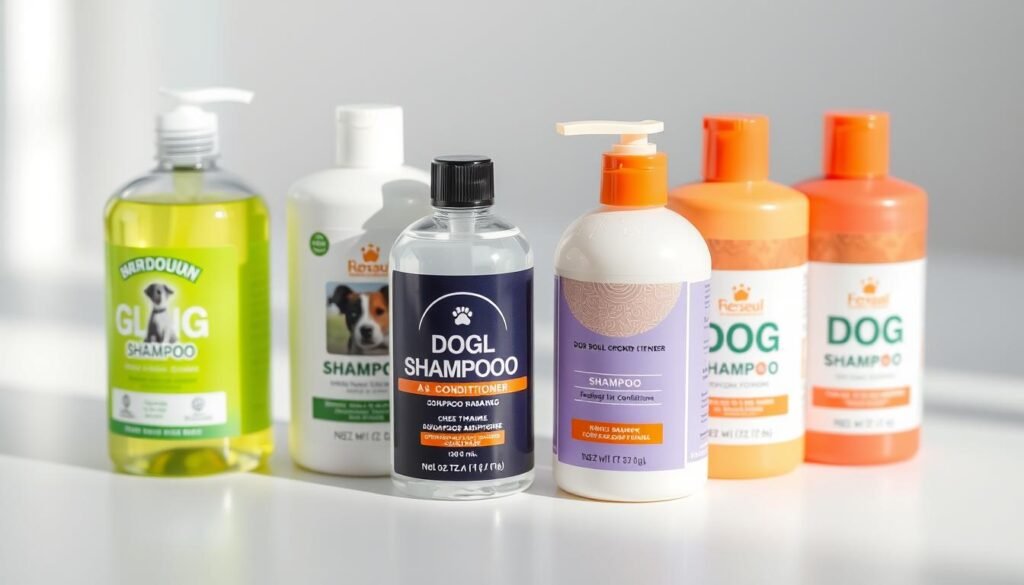
Dogs’ skin pH sits around 6.2–7.4, which is more neutral than human skin. That means human shampoo or soap can disrupt the acid mantle and cause dryness, flakes, or infection risk.
Why human shampoo or soap is a no-go
Avoid human products. Their formulas suit human skin and can strip natural oils from a dog coat. Use only cleaners labeled for canine use.
Vet-recommended options and medicated needs
If your pet has allergies, hot spots, or recurrent yeast issues, talk with a vet about medicated shampoos. Some medicated formulas require specific contact time or dilution—read the label and follow instructions.
“Choose a mild, hypoallergenic cleanser for regular care and a vet-led medicated product for treating skin conditions.”
- Make sure you read age and dilution guidance on the products before use.
- Use conditioner for long hair or dry skin to add slip and protect natural oils.
- Keep shampoo away from the eyes and clean the face with a damp cloth instead.
| Goal | Suggested product type | Quick tip |
|---|---|---|
| Daily freshness | Mild, hypoallergenic shampoo | pH-balanced; gentle surfactants |
| Sensitive skin | Vet-recommended soothing formula | Follow contact time and dilution |
| Detangling long coat | Conditioner or detangling rinse | Apply after shampoo; rinse well |
Skin, ears, and nails: bath-time safety and health checks
Use bath time as a quick head-to-tail health check for skin changes, pests, and hidden bumps. A brief scan while you lather and rinse helps you spot fleas, ticks, redness, or new lumps that need vet attention.
Spotting parasites, irritation, lumps and bumps
Work methodically across the body. Part the coat and run fingers over the skin, looking for tiny movers, hot spots, or raised areas.
If you find something unusual, take a photo and schedule a vet visit. Early detection can prevent bigger problems.
Ear moisture prevention and post-bath nail trims
Make sure ears stay dry by placing cotton gently in the ear canal during the wash and removing it before drying. Clean ears only when it’s part of your dog’s care plan or a vet recommends it.
Nails soften after a warm rinse. Use this window for careful trims and reward calm behavior with treats.
- Keep the tub draining and supervise the whole time for safety.
- Avoid soap in the eyes and clean the face with a damp cloth.
- Brush dog once fully dry to remove loose fur and prevent mats.
Finish with praise and a small reward. That reinforces positive grooming habits and makes future sessions easier for both of you.
Bathing puppies: timing, gentle technique, and extra care
A puppy’s first baths set the tone for future grooming, so keep sessions short and gentle. Aim for a calm, slow introduction and check age guidance on any products before you start. It’s generally safe to bathe puppies at about eight weeks, but always confirm product labels and vet advice.
Use lukewarm, low-pressure water and limit contact time. Clean the dog face with a damp cloth to avoid the eyes and nose. Place cotton gently in the ears to reduce moisture and remove it before drying.
Gentle handling and safety notes
- You’ll confirm age and make sure products list an appropriate minimum age before use.
- Introduce towels, the sprayer, and shampoo slowly—let pups sniff and hear water at low flow first.
- Use a mild shampoo sparingly, rinse thoroughly, and avoid fragrant formulas that may irritate young skin.
- Watch for hot cold sensitivity and keep your pup warm indoors until fully dry to prevent chills.
- Consult your vet about frequency and product type, especially for sensitive skin or allergies.
Finish bath time with treats and play so pups link washing dog with something positive. That short reward closes the session on a happy note and helps build good grooming habits.
Conclusion
Wrap up the process with a quick scan and a warm reward so baths feel normal and safe. Follow the step sequence — prep, lukewarm water, face-safe cleaning, thorough rinsing, and careful drying — to protect skin and comfort.
Make sure supplies and treats are staged ahead of time so future sessions stay easy. Use dog-specific shampoos, keep soap away from the eyes, and plan how often bathe based on coat and activity.
If you notice unexplained odor, irritation, or new bumps, call your vet. With this process repeated calmly and often, you’ll give dog reliable care, build confidence, and keep dogs healthy year-round.
FAQ
What will you achieve with a proper bath time?
You’ll remove dirt, control odor, and keep the coat healthy while checking skin for irritation, parasites, or lumps. A good wash also helps distribute natural oils and reduces shedding when paired with brushing.
What must-have products should you have before starting?
Bring a dog-specific shampoo, optional conditioner or detangler for long coats, ear-cleaning solution, and a gentle face cleanser. Avoid human soaps and harsh detergents that strip natural oils.
Which tools and setup make bath time easier?
Use a non-slip mat, several absorbent towels, a soft brush, a grooming loop or leash to secure your dog, and a spray nozzle or pitcher for gentle rinsing. Keep treats handy for rewards.
Where is best for washing small dogs?
A kitchen sink or utility tub works well for small breeds. The height saves your back and gives you control while limiting escape routes.
Where should you bathe medium and large breeds?
Use a bathtub, walk-in shower, or a low-walled tub. Add a non-slip mat and a detachable showerhead or low-pressure sprayer to rinse efficiently.
Can you wash a dog outdoors?
Yes—use a warm-water hose or buckets on mild days. Choose a shaded spot, keep water lukewarm, and be mindful of runoff and temperature to avoid chilling or overheating.
When should you use a self-service dog wash or pro groomer?
Try a self-service station for convenience and heavy dirt. Choose professional grooming for mat removal, medicated treatments, or anxiety-prone dogs that need experienced handlers.
How do you keep a pup calm during bath time?
Use positive reinforcement—treats, toys, and a calm voice. Work slowly, reward small wins, and create a predictable routine so the dog learns that baths are safe and pleasant.
What handling techniques reduce stress?
Use firm but gentle restraint, avoid quick or jerky moves, speak softly, and pause if your dog becomes tense. Short, frequent sessions build confidence more than long, stressful baths.
What water temperature and pressure are safe?
Lukewarm water and low flow are best. High pressure can frighten dogs and damage skin; always test temperature on your wrist before wetting your dog.
Should you use hot or cold water?
Avoid both extremes. Hot water dries and irritates skin; cold water can cause stress and chills. Lukewarm protects sensitive dog skin and keeps your pet comfortable.
What are the first steps in a step-by-step wash?
Brush thoroughly to remove tangles and loose fur before wetting. Removing mats prevents tighter tangling and helps shampoo reach the skin evenly.
How do you secure your dog and protect ears before wetting?
Use a grooming loop or leash to steady your dog. Place a small cotton ball gently in each ear only if recommended by your vet, and never push it deep into the canal.
What’s the best wetting technique?
Wet from the neck or chest toward the tail, avoiding the face at first. This helps keep soap away from eyes and keeps your dog calmer during the initial rinse.
How should you apply shampoo and lather?
Use a dog shampoo that matches coat and skin needs. Lather gently from neck down, massaging to the skin without scrubbing harshly. Keep shampoo away from the eyes and inside the ears.
How do you clean the face safely?
Use a damp cloth or a face-safe cleanser formulated for dogs. Wipe around eyes, muzzle, and ears carefully—never spray directly on the face or use human products.
How thorough must rinsing be?
Rinse thoroughly until water runs clear. Leftover shampoo can irritate skin and cause itching. Rinse twice if your dog has a thick coat or used conditioner.
When should you use conditioner and how?
Apply conditioner for long coats, dry skin, or after medicated shampoos (if directed). Work through the fur, leave per product instructions, then rinse fully to avoid residue.
What’s the best drying method after a bath?
Start with an absorbent towel to blot excess water. Keep your dog warm indoors until mostly dry. For long coats, use multiple towels and change if they become saturated.
When is it appropriate to use a dryer?
Use a cool- or low-heat pet dryer on a low-pressure setting. Maintain distance and keep the dryer moving to avoid hot spots. Some dogs tolerate forced-air dryers well; introduce them slowly.
How often should you wash without stripping natural oils?
Frequency depends on coat type, skin condition, and lifestyle. Most dogs need a bath every 4–8 weeks; dogs with skin issues or heavy outdoor activity may need tailored schedules set with your veterinarian.
How does coat length and lifestyle affect bath frequency?
Short-haired, indoor dogs usually need fewer baths. Long coats, heavy shedders, or active outdoor dogs often need more frequent washing and brushing to prevent mats and odors.
Why can’t you use human shampoo or soap?
Human products often have a different pH and can dry out or irritate canine skin, stripping protective oils. Use formulations made for dogs to protect the coat and skin barrier.
What vet-recommended options exist for sensitive skin?
Vets often recommend hypoallergenic, oatmeal, or medicated shampoos for allergies, yeast, or bacterial infections. Always follow your veterinarian’s guidance for medicated products.
What health checks should you do during bath time?
Look for parasites, rashes, hotspots, lumps, and unusual odors. Check skin color, scabs, and hair loss. Early detection lets you consult your veterinarian sooner.
How do you prevent ear moisture problems after a bath?
Dry the outer ear gently with a towel. Avoid pushing water into the ear canal. If your dog is prone to infections, use a vet-recommended ear-drying solution as directed.
Should you trim nails after a bath?
Bath time softens nails, making trims easier. If you’re comfortable, trim after drying. If not, have a groomer or vet handle nails to avoid injuring the quick.
When can you start bathing puppies?
Wait until their vaccinations are up to date and they can regulate body temperature—typically after 8–12 weeks. Use very gentle, puppy-formulated products and keep sessions short and warm.
What special care do puppies need during washing?
Use lukewarm water, a mild puppy shampoo, and a soft touch. Support their body, avoid the face, and reward them often. Dry quickly and keep them warm until fully dry.

My name is Igor Silva and I’ve been passionate about animals since childhood. I dedicate my work to sharing reliable, practical information about pet care, health, and well-being.